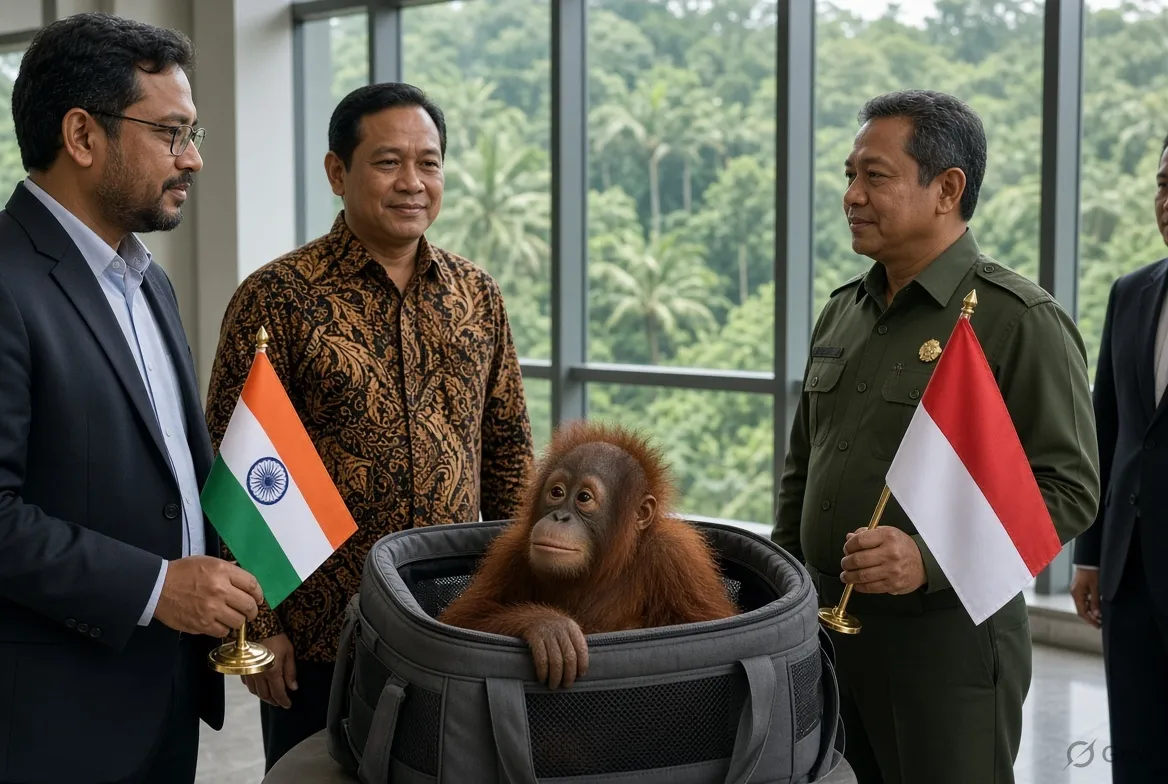
A baby Sumatran orangutan, rescued in India in 2024, returned to its native Indonesia on Monday, October 19, 2026, marking a significant moment in international wildlife conservation. The young primate of Sumatran origin arrived at Kualanamu International Airport in Medan after coordinated efforts by wildlife authorities and the CITES Management Authorities of both countries. Officials from the Consulate General of India attended a reception organised by Indonesia’s Ministry of Forestry, underscoring the collaborative spirit behind the operation.
This successful repatriation highlights the shared commitment of India and Indonesia to protecting critically endangered species and combating illegal wildlife trade. It also sets a positive precedent for future cross-border conservation work.
The Rescue from Illegal Trade
The orangutan was rescued in November 2024 in India. Authorities recovered the animal as part of efforts against illegal wildlife trafficking. It had been kept in extremely confined conditions before being taken into official care. Sumatran orangutans, scientifically known as Pongo abelii, are native exclusively to the Indonesian island of Sumatra and are classified as critically endangered. Their populations face severe pressure from habitat loss and the illegal pet trade, making every individual returned to its range of high conservation value.
Once in custody of Indian wildlife authorities, the animal received immediate attention. Veterinary care ensured its health stabilised after the trauma of capture and confinement. It was provided with appropriate habitat facilities designed to meet the needs of a young great ape, including space for movement, climbing opportunities, and a suitable diet. These steps were essential to prepare the orangutan for a long journey home and eventual rehabilitation in Indonesia.
Care and Preparation in India
Throughout its stay in India, the orangutan remained under the supervision of specialised wildlife teams. From the initial rescue site, it was eventually transferred to facilities in Gujarat capable of providing long-term care. There, continuous veterinary monitoring, health checks, and habitat enrichment supported its recovery. The animal was assessed as fit for travel only after thorough evaluations confirmed its physical readiness and freedom from certain diseases.
As a special gesture of goodwill, the Government of India waived recovery of all costs incurred for the orangutan’s care and maintenance prior to repatriation. This decision reflected not only administrative cooperation but also a recognition of the shared responsibility for protecting species that transcend national borders. The Indian Embassy in Jakarta later emphasised that the process followed all applicable requirements and protocols under the Convention on International Trade in Endangered Species of Wild Fauna and Flora (CITES).
The Journey Home and Formal Reception
On October 19, 2026, the orangutan departed from Gujarat and landed at Kualanamu International Airport in Medan, North Sumatra. The arrival was marked by a formal reception organised by Indonesia’s Ministry of Forestry. Representatives from the Consulate General of India in Medan were present, symbolising the diplomatic and technical partnership that made the transfer possible.
CITES Management Authorities from both nations worked closely throughout the planning and execution stages. Their coordination ensured compliance with international standards for the transport of live endangered animals, including health certifications, transport conditions, and quarantine arrangements upon arrival. Once in Indonesia, the orangutan is expected to enter a quarantine phase before moving to a specialised rehabilitation centre, where it can continue developing the skills needed for eventual release into suitable habitat, should that become possible.
Strengthening Bilateral Ties Through Conservation
The Indian mission in Jakarta described the successful repatriation as a reflection of the close bilateral ties between India and Indonesia. Both countries share a commitment to the protection and conservation of endangered species. This case demonstrates how practical cooperation under global frameworks like CITES can deliver tangible results for wildlife.
Sumatran orangutans play a vital ecological role as seed dispersers in tropical forests. Their survival is linked to the health of remaining rainforest ecosystems on Sumatra. Returning even a single individual helps maintain genetic diversity and supports broader recovery efforts. At the same time, the operation sends a clear message against illegal wildlife trade networks that move rare animals across continents.
Broader Context of Orangutan Protection
Illegal trade remains one of the primary threats to orangutans. Young animals are particularly targeted for the exotic pet market because of their appealing appearance and relatively manageable size. Once removed from the wild, they lose the opportunity to learn essential survival skills from their mothers and social groups. Rehabilitation after such disruption is lengthy and complex, often requiring years of specialised care before any possibility of release.
India and Indonesia’s joint handling of this case shows how countries of origin and destination can work together effectively. Timely information sharing, mutual recognition of CITES procedures, and political will at the official level all contributed to a smooth process. The Indian government also noted that efforts are underway regarding five young orangutans rescued in Odisha in September 2026. Their possible repatriation will depend on confirmation of species and origin as well as completion of required procedures.
A Precedent for Future Collaboration
This repatriation is notable for its careful adherence to international protocols and the goodwill shown by both sides. By waiving care costs and ensuring high standards of animal welfare throughout, India demonstrated practical support for species conservation beyond its borders. Indonesia’s organised reception and readiness to receive the animal into its national system completed the circle of responsibility.
Wildlife authorities in both countries continue to face the challenge of detecting and disrupting trafficking routes. Strengthening capacity for investigation, improving inter-agency coordination, and raising public awareness about the true cost of the exotic pet trade remain essential. Cases like this one provide encouragement that determined action can reverse the harm done to individual animals and, by extension, to threatened populations.
The return of the baby Sumatran orangutan to Indonesia on October 19, 2026, stands as a concrete example of what effective international cooperation can achieve. It brings one more critically endangered great ape closer to its natural homeland while reinforcing the partnership between India and Indonesia in the global effort to protect biodiversity. Continued vigilance and collaboration will be needed to ensure that more such animals can follow the same path home.
Read more – Bestmenuideas.com