
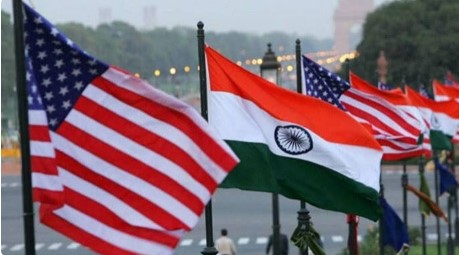
The long and winding negotiations between India and the United States over their proposed bilateral trade agreement appear to be approaching a decisive moment. A new round of talks has been scheduled for June 23 and 24, with a delegation from the Office of the United States Trade Representative set to travel to New Delhi for high-level discussions aimed at putting the finishing touches on the first tranche of the deal, according to a senior government official who confirmed the development on Monday.
This upcoming visit is widely seen as one of the most consequential rounds yet, not only because of its timing but also because of the tone set by officials on both sides in recent weeks. According to Commerce Secretary Rajesh Agrawal, the discussions are expected to focus on giving final touches to the first tranche of the agreement while also advancing the broader Bilateral Trade Agreement that has been under negotiation for months. In other words, the June 23-24 meeting is not an isolated event but the latest step in a continuum of engagement that has been building momentum since the start of the year.
A Pattern of Escalating Engagement
The upcoming talks follow directly on the heels of an earlier round held in the capital. During talks held from June 2 to June 4, both sides deliberated on trade in goods, non-tariff measures, customs and trade facilitation, and economic security alignment, among other areas of mutual interest. That round itself was part of a broader diplomatic arc that traces back to a joint statement issued earlier this year. In February, India and the US issued a joint statement outlining a framework for an interim agreement based on reciprocal and mutually beneficial trade, while also reaffirming both countries’ commitment to continue negotiations toward a comprehensive bilateral trade agreement.
What makes the June 23-24 round particularly notable is the optimism that has been building around it. Just weeks earlier, US Ambassador to India Sergio Gor said the India-US trade deal was 99 percent complete, with both sides working to resolve the remaining one percent of sticking points, and expressed expectation that the long-awaited pact would be signed within the next several weeks. Speaking at an industry event in Mumbai, Gor noted that bilateral merchandise and services trade between the two countries had grown from 20 billion dollars to 220 billion dollars over the past two decades, an elevenfold increase.
Gor’s remarks carried added significance given the broader strategic framing he attached to the relationship. He described the US-India partnership as the most consequential global partnership of the century, and said he hoped to make it the defining strategic relationship of the 21st century while delivering tangible results for citizens of both nations. Perhaps most striking was his comparison of the pace of these negotiations to past trade deals. Gor pointed out that talks on the India-US agreement have been ongoing for around one and a half years, compared to nearly 19 years it took the European Union to conclude its own trade agreement with India.
What Remains on the Table
Despite the optimistic tone, officials on both sides have been careful not to overstate how close the deal actually is to a final signature. According to one report, the remaining one percent of the negotiations primarily concerns technical legal language and implementation timelines rather than major policy disagreements.
On the Indian side, Commerce Minister Piyush Goyal has repeatedly emphasized that the country’s negotiating priority extends beyond simply lowering tariffs. Goyal told reporters that India is working out a mechanism by which it can secure preferential market access in the US market compared to its competitors, underscoring that New Delhi’s objective is not just tariff relief but a genuine competitive edge for Indian exporters relative to other trading partners of the US.
The negotiations have also unfolded against the backdrop of broader US trade actions that have complicated the picture. Gor addressed questions related to two separate Section 301 investigations launched by the USTR in March 2026, covering 60 economies over concerns about forced labour and excess industrial capacity, with findings on the forced labour probe issued in early June and additional tariffs proposed on imports from those economies. Importantly, Gor clarified that these tariffs were applied globally and were not specifically targeted at India, an assurance likely intended to reassure Indian stakeholders that the broader US trade posture would not derail the bilateral deal.
The Bigger Picture: Mission 500
The interim agreement being finalized is widely viewed as a stepping stone toward a much larger ambition. Earlier in the process, Prime Minister Narendra Modi and President Donald Trump agreed to launch talks for a comprehensive bilateral trade agreement as part of “Mission 500,” an initiative aimed at more than doubling bilateral trade to 500 billion dollars by 2030. The agreement comprises two distinct components: one that will naturally take longer to negotiate given its scope, and a first tranche specifically aimed at resolving tariff-related issues.
The negotiating history has not been without setbacks. An earlier scheduled visit by India’s negotiating team was postponed following a US Supreme Court ruling that struck down reciprocal tariffs imposed by President Trump, after the court found that the executive branch had exceeded its constitutional authority in using emergency powers to levy broad import duties.
Looking Ahead
As the June 23-24 talks approach, expectations are running high but tempered with the realism that has characterized this negotiation from the start. With Commerce Secretary Agrawal indicating that the upcoming round will address both the finishing touches on the interim deal and progress on the wider agreement, and with the US side signaling that a signature could come within weeks, the next set of meetings could prove pivotal in determining whether the first tranche of the India-US trade deal finally crosses the finish line after more than a year of sustained negotiation. For businesses and exporters on both sides of the Pacific, the outcome of these talks will offer the clearest signal yet of how soon the promised gains in market access, tariff relief, and economic cooperation might actually materialize.
