
India’s first high-speed rail project, the Mumbai-Ahmedabad High Speed Rail corridor, is approaching a critical phase. The priority section is now targeted for commercial operations in 2027, years after the original 2022 goal. As the National High-Speed Rail Corporation Limited prepares to introduce domestically manufactured trains on the initial stretch, a leading Japanese expert has underscored a fundamental principle of high-speed rail operations: different types of bullet trains and their corresponding signalling systems cannot safely share the same corridor.
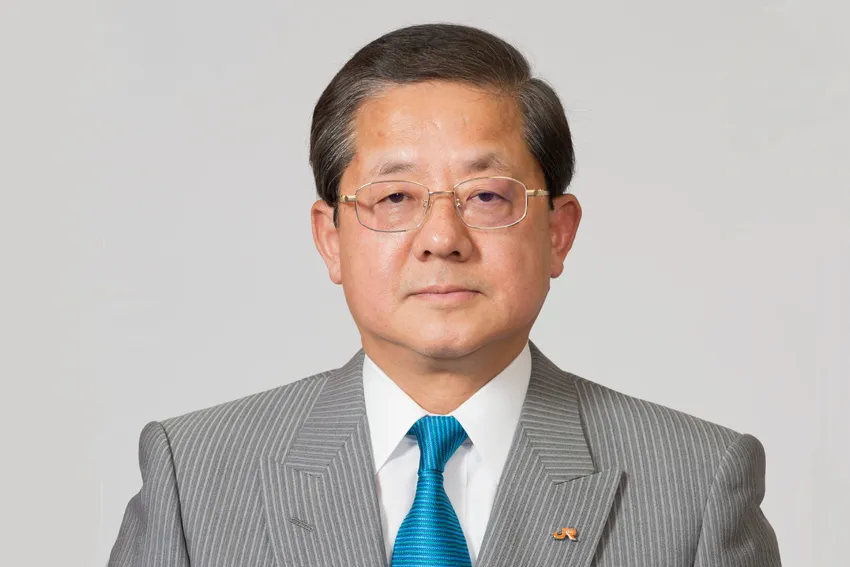
Masafumi Shukuri, Chairman of the Japan Transport and Tourism Research Institute and the International High-Speed Rail Association, made the observation during discussions on the project’s progress. Speaking on the sidelines of an economic conclave, he emphasised that “crash avoidance” remains absolutely paramount in high-speed rail systems. Passengers must be able to travel without concern over safety or reliability. According to him, India will ultimately need to demonstrate the safety of operating two distinct systems—one domestically developed and the other based on Japanese technology—before settling on a single integrated approach for the full corridor.
The Imperative of System Integration
High-speed rail differs fundamentally from conventional railway networks. At speeds approaching or exceeding 250 kilometres per hour, even minor inconsistencies in train control, braking response or communication protocols can have serious consequences. Japan’s Shinkansen network, operational since 1964, has maintained an exceptional safety record precisely because it functions as a single, fully integrated system. This encompasses dedicated tracks, advanced automatic train control, standardised rolling stock, rigorous maintenance regimes, and highly trained personnel.
Shukuri has repeatedly highlighted that the Shinkansen’s near-perfect punctuality and zero passenger fatalities over six decades stem from this total systems approach. Introducing a second type of train with a different signalling architecture on the same line would break that integration. There is no established global precedent for running two incompatible high-speed systems side by side on one corridor while preserving the same level of safety assurance.
India’s Evolving Technology Choices
The Mumbai-Ahmedabad corridor was originally conceived around Japanese Shinkansen technology, including the trains, signalling and operations control centre. Civil construction has progressed under Indian responsibility with Japanese technical oversight. However, timelines for the next-generation Japanese E10 series trains have shifted. These sets are still under development in Japan and are not expected to be available for Indian operations until the early 2030s.
To meet the 2027 target for the priority section between Surat and Bilimora or Vapi in Gujarat, India is proceeding with its own high-speed trainsets. Manufactured domestically, these trains are designed for operational speeds in the range of 250 kilometres per hour. Parallel decisions have been taken on signalling. Rather than the proprietary Japanese digital automatic train control system, the project is implementing an internationally interoperable European Train Control System Level 2 platform. Contracts for this work have already been awarded.
These choices reflect practical constraints of schedule and supplier readiness. They also align with India’s broader push for indigenous manufacturing capability in critical infrastructure. Yet they introduce the very situation Shukuri has cautioned against: the potential coexistence of different rolling stock and control systems during the transition period and beyond.
Safety, Training and Operational Readiness
Shukuri has stated that the decision to use domestically produced trains is acceptable provided safety, stability and reliability are fully proven. He stressed that successful high-speed operations depend on far more than hardware procurement. Comprehensive training of drivers, signalling staff, maintenance crews and operations controllers must be completed on schedule. Extensive trial runs are essential to validate performance under Indian conditions before commercial service begins.
The priority section will therefore serve as a proving ground. Authorities will need to establish that the indigenous trains, working with the chosen signalling system, meet the stringent safety standards expected of high-speed rail. Only after this demonstration can decisions be finalised about the technology package for the remaining sections of the 508-kilometre corridor and for future high-speed lines planned across the country.
Project Context and Timeline Realities
The Mumbai-Ahmedabad project has faced well-documented challenges, including land acquisition complexities and disruptions during the pandemic years. Shukuri has contextualised the revised schedule by noting that even Japan, with more than six decades of high-speed rail experience, would struggle to complete a comparable 500-kilometre corridor within a decade under present conditions. Viewed against the scale of the undertaking and the fact that this is India’s first such project, the current timeline represents substantial progress rather than simple delay.
Construction on the Gujarat sections has advanced significantly. Track laying, electrification and station works continue, with the first passenger services expected in 2027. Subsequent stretches will open in phases as civil works, systems installation and testing are completed. The full corridor is projected for later in the decade.
Broader Implications for India’s High-Speed Ambitions
India has outlined plans for an extensive high-speed network spanning thousands of kilometres in the coming decades. Experience gained on the Mumbai-Ahmedabad corridor will shape technology choices, procurement strategies and safety frameworks for these future lines. The emphasis on indigenous trains and interoperable signalling already points toward greater self-reliance. At the same time, the Japanese partnership continues to provide valuable expertise in design standards, quality control and operational philosophy.
Shukuri’s intervention serves as a timely reminder that high-speed rail success rests on uncompromising safety architecture. Mixing systems may appear pragmatic in the short term to meet commissioning targets, but long-term operations demand coherence. India will need to generate clear evidence that any transitional dual-system phase does not compromise the crash-avoidance principles that define modern high-speed railways.
The coming years will test both engineering capability and institutional coordination. If the priority section demonstrates reliable and safe performance with the indigenous trains and selected signalling, it will strengthen confidence in India’s ability to manage complex high-speed systems. Ultimately, the corridor is likely to converge on a single, fully integrated technology package—precisely the outcome the Japanese expert has advised. Achieving that outcome while delivering the first passenger services on schedule remains the central challenge for project authorities.
Read more – brandownerdetail.com
