
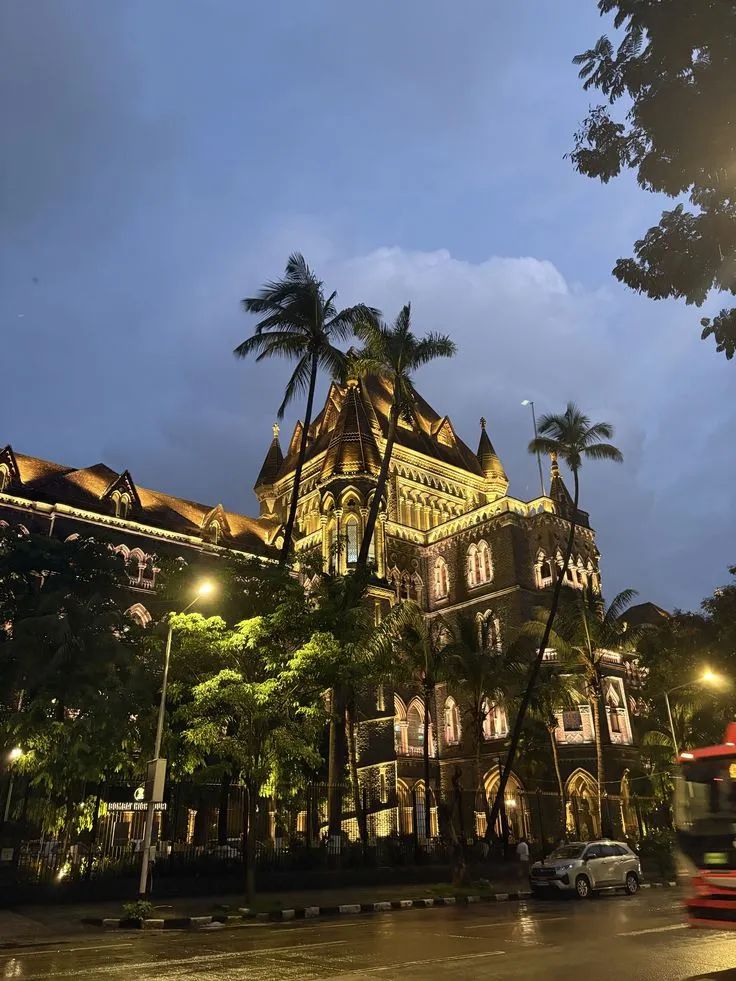
The Bombay High Court recently delivered strong observations on civic behaviour while hearing petitions related to pollution and health hazards linked to the Kanjurmarg dumping ground in Mumbai. A bench of Justices G.S. Kulkarni and Aarti Sathe questioned a widespread attitude among citizens who freely litter public spaces in India yet carefully follow cleanliness rules when travelling abroad. The court described this contradiction as a serious concern and asked whether such disregard for public hygiene represents the price of liberty and democracy.
Background of the Hearing
The remarks came during the hearing of a batch of petitions concerning the Kanjurmarg waste management site in Mumbai’s eastern suburbs. Residents and environmental groups have long raised issues of foul odour, gas emissions, and associated health risks affecting people living near the facility. The court noted that the problems of the dumping ground are closely connected to the broader issue of garbage accumulating on city streets, bylanes, and public spaces.
Municipal authorities were directed to take stricter and more effective measures. The bench emphasised that both citizens and the civic administration share responsibility for maintaining cleanliness. Without consistent enforcement and public cooperation, the city’s waste management challenges would remain self-inflicted.
The Court’s Key Observations on Civic Behaviour
One of the most pointed comments addressed the double standard in public conduct. The court observed that many people throw garbage on roads and public places in India without hesitation. The same individuals, however, carefully dispose of even a small chocolate wrapper in a dustbin when they are abroad. This contrast, the bench suggested, cannot be explained away by claims of personal freedom.
The judges asked whether this behaviour is the price society pays for liberty and democracy. They stressed that the right to a clean environment carries a corresponding fundamental duty on the part of citizens to maintain cleanliness. The court made it clear that civic officials must act firmly and without hesitation against violations.
Plastic waste received particular attention. The bench noted that beaches such as Juhu, Mahim, and Dadar Chowpatty continue to be flooded with plastic every year. It questioned whether such conditions are consistent with living in a civilised society. Garbage dumped on main roads and bylanes was described as creating daily health and hygiene hazards for residents.
Concerns About Heritage Areas and Tourists
The court also expressed strong dissatisfaction over the handling of municipal garbage near prominent heritage sites in South Mumbai. It found it difficult to accept that garbage collection trucks and temporary arrangements were creating filth and odour in areas visited by large numbers of domestic and foreign tourists, including locations near the Rajabai Tower and the High Court itself.
Tourists, the court observed, were often forced to cover their noses because of the conditions. The bench indicated that without judicial intervention and clear directions, meaningful action frequently fails to materialise. Similar concerns were raised about other prestigious public spaces in the Fort area that had become littered and unpleasant.
Call for Strict Enforcement and Sensitisation
The court underlined the need for both sensitisation of citizens and rigorous enforcement by municipal officers. It referred to the Brihanmumbai Municipal Corporation’s own slogan promoting a clean and beautiful Mumbai and noted that the intended message was being defeated by public littering and inadequate civic response.
Ward-level officers were told that they must develop a stronger sense of ownership and responsibility. The bench observed that officials should not remain detached in air-conditioned offices while conditions on the ground deteriorate. It called for strict implementation of solid waste management norms and indicated that officers could seek police assistance if necessary while taking action.
Timelines were indicated for corrective steps, with the court making clear that failure to act could lead to further judicial directions. The matter was listed for further hearing to monitor progress.
Wider Implications of the Remarks
The court’s observations go beyond the specific problems of one dumping ground. They highlight a recurring tension in urban India between individual behaviour and collective civic standards. Clean streets, reduced plastic pollution, and effective waste management cannot be achieved solely through infrastructure or municipal machinery. Public habits play an equally decisive role.
By linking the right to a clean environment with the duty to keep public spaces clean, the court reinforced an important constitutional principle. Rights and responsibilities exist together. When large numbers of people treat roads, beaches, and open spaces as convenient dumping grounds, the resulting pollution and health risks affect everyone, including those who try to follow the rules.
The contrast drawn with behaviour abroad is particularly telling. It suggests that the problem is not an inability to understand or follow cleanliness norms, but a selective application of those norms depending on location and perceived consequences. Changing this mindset requires consistent enforcement, public education, and a shared sense that local public spaces deserve the same respect as those in other countries.
The Path Forward
Lasting improvement will depend on coordinated action. Municipal authorities need to ensure efficient collection, proper processing, and visible accountability at the ward level. Citizens need to recognise that everyday acts of littering contribute directly to larger environmental and public health problems. Sensitisation campaigns, stricter penalties for violations, and better infrastructure for waste disposal can support the shift, but none of these measures will succeed without widespread public cooperation.
The Bombay High Court’s remarks serve as a reminder that a clean city is not produced by liberty alone. It requires the disciplined exercise of that liberty in ways that protect shared spaces and the health of the community. The questions raised about the price of liberty and the standards of a civilised society are not merely rhetorical. They point to the practical choices citizens and institutions must make if urban environments are to become healthier and more liveable.
Read more – thewhipp.com
