India’s Unified Payments Interface has transformed everyday commerce, enabling instant transfers for everything from street-side purchases to large retail transactions. For years the system has operated without a fee for users. Now, as the industry weighs options to sustain and expand the platform, clarity has emerged on one critical point: any potential Merchant Discount Rate would leave the vast majority of everyday payments untouched. According to sources familiar with the discussions, the annual cost of maintaining UPI-related infrastructure stands at around Rs 15,000 crore, and generating resources to support further growth—including possible cross-border expansion—cannot rely indefinitely on public funds or the current subsidy model.
Why the Conversation on Fees Has Resurfaced
UPI’s success is built on zero cost for consumers and, for a long period, zero Merchant Discount Rate for most merchant transactions. Banks, payment companies, fintechs, the National Payments Corporation of India and the Reserve Bank of India have collectively borne the operating expenses. Those costs cover technology, cybersecurity, fraud prevention, system reliability and continuous innovation. Industry estimates place the yearly outlay near Rs 15,000 crore. As transaction volumes have grown into the billions each month, the financial burden has become more pronounced, and growth has shown signs of moderation in some periods.
Sources indicate that continued expansion, particularly beyond domestic use, requires a more sustainable funding mechanism. Public budgets cannot absorb the full cost indefinitely. The emerging view within the payments industry is that a carefully designed MDR on a limited set of transactions could generate the necessary resources without disrupting the inclusive character that made UPI ubiquitous.
Small Payments Will Remain Free
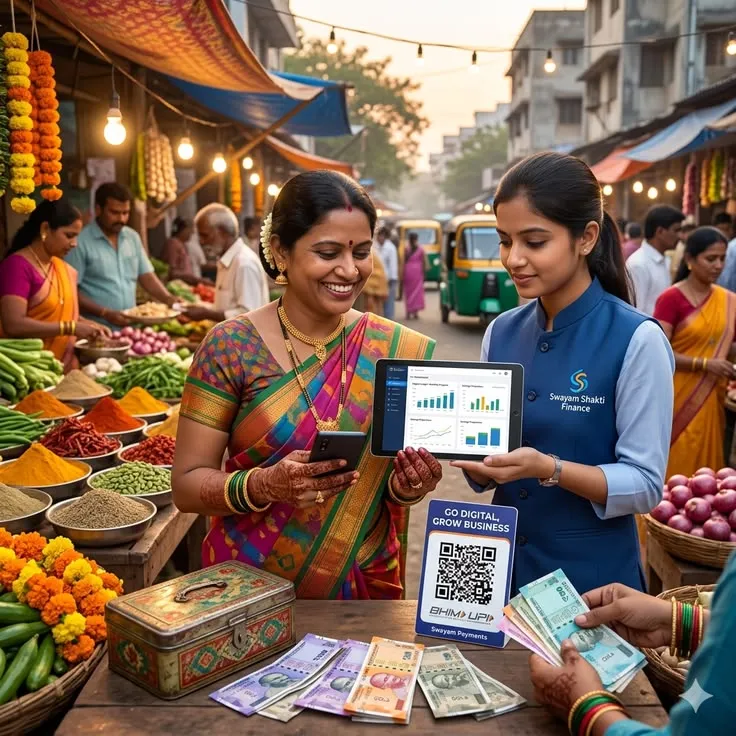
The most important assurance for ordinary users and small businesses is that any fee structure under discussion would exempt small-value payments. A senior payments industry official has stated that an MDR would not be applied to transactions typical of kirana stores, where the average ticket size is Rs 100–200. More than 95 per cent of UPI transactions would therefore face no charge.
Data from 2025-26 illustrates why this threshold matters. Only about 4 per cent of person-to-merchant UPI payments exceeded Rs 2,000. Yet those higher-value transactions accounted for roughly two-thirds of the total value processed. In practical terms, the high volume of everyday low-value payments—tea, vegetables, local services, neighbourhood shopping—would continue exactly as they do today: free for both the payer and the small merchant.
The Payments Council of India has reinforced this position publicly, stating that consumers will not pay to use UPI and that small merchants, including kirana stores, are not required to pay charges for accepting digital payments. Any commercial arrangement involving larger merchants would remain between those businesses and their payment service providers.
Focus on Large Merchants and Higher-Value Transactions
Industry discussions have centred on applying a modest MDR to larger merchants or higher-value transactions, such as those on e-commerce platforms and in shopping malls. Proposed rates mentioned in various reports have ranged from a few basis points to around 0.3–0.6 per cent in some scenarios, though no final figure has been settled. The guiding principle is that businesses with substantial turnover are better positioned to absorb a regulated fee, while the smallest merchants and all peer-to-peer transfers stay protected.
This approach aims to preserve the democratising effect of UPI. Millions of small retailers adopted digital payments precisely because acceptance carried no cost. Removing that advantage would risk reversing gains in formalisation and financial inclusion. By concentrating any charge on a narrow slice of high-value activity, the industry hopes to recover infrastructure costs without altering the daily experience of most users.
Legislative Context and Current Status
Recent legislative changes have removed the statutory prohibition on levying MDR for certain notified electronic payment modes, including UPI. The amendment does not itself impose a fee; it creates the legal space for the government or the relevant authorities to introduce one through future notification if they choose. Finance Minister Nirmala Sitharaman has noted that the UPI and Services Steering Committee, headed by the National Payments Corporation of India, has yet to take a decision on MDR.
Until such a decision is made and notified, the existing zero-MDR framework continues. Consumers remain unaffected, and small merchants continue to accept payments without charge. The policy conversation is therefore about designing a sustainable model for the next phase of growth rather than an immediate shift in pricing for ordinary users.
Balancing Inclusion and Sustainability
UPI’s rapid adoption succeeded in large part because it eliminated friction for both payers and small receivers. Any future framework must protect that accessibility. At the same time, the infrastructure that processes billions of transactions requires continuous investment in capacity, security and reliability. Cross-border linkages, new use cases and rising transaction volumes will only increase those requirements.
A selective MDR limited to large merchants or higher-value payments offers one possible route to internalise costs within the commercial ecosystem that benefits most from high-value flows. Industry voices argue that such a measured step would reduce dependence on government incentives, free public resources for other priorities, and still leave the overwhelming majority of transactions—and all consumer-facing charges—untouched.
What Users and Small Businesses Should Expect
For the average person scanning a QR code at a local shop or transferring money to family, nothing changes. For kirana stores, vegetable vendors and other small enterprises, acceptance of UPI is expected to remain free of MDR. Larger online and offline merchants may eventually face a regulated fee if authorities decide to introduce one, but that outcome is still under discussion and would be subject to clear thresholds and rates.
The Rs 15,000 crore annual infrastructure cost underscores why the conversation is occurring. Growth on the scale UPI has achieved cannot be maintained indefinitely without a viable funding path. The emerging consensus among sources close to the matter is that any solution should leave small payments—and the people who rely on them—completely untouched while allowing the system to finance its own next stage of expansion.
Reed more – medbrainmedia.com