
Naomi Osaka arrived at Arthur Ashe Stadium for her night-session opener at the US Open making a clear fashion statement. The two-time champion referenced basketball icon Allen Iverson in her look, drawing attention both for the style choice and for the conversation it sparked about self-expression in sport. Osaka faced Anastasia Zakharova under the lights in New York, continuing a pattern in which her off-court and on-court appearance receives nearly as much notice as her performance.
A Deliberate Nod to a Trailblazer
Osaka has spoken directly about the significance of the Allen Iverson reference. In comments surrounding the tournament, she described Iverson as a trailblazer whose influence extended well beyond the basketball court. She noted that he shifted the way NBA players approached dress and style, whether intentionally or simply by being himself. For Osaka, that willingness to express individuality through clothing carries lasting meaning.
She has pointed to the broader conversation around clothes in sports and the freedom to show personality through style. Iverson, known for his braids, tattoos, arm sleeves and distinctive off-court fashion during his playing career, challenged conventional expectations of how athletes should present themselves. Osaka’s choice to channel that spirit at one of tennis’s biggest stages aligns with her own history of using fashion as a form of personal and cultural expression.
Fashion as Part of the Performance
Osaka has long treated Grand Slam appearances as opportunities for more than pure athleticism. She has described walk-ons at major tournaments as moments when she feels closest to being an entertainer. Over recent years her US Open looks have included elaborate collaborations, dramatic silhouettes, cultural references and carefully chosen accessories. Practice days this year already featured bold colour, distinctive silhouettes and detailed styling, setting an expectation that her match-day presentation would continue in the same vein.
The night-session setting at Arthur Ashe adds another layer. Evening matches under the lights carry a theatrical quality, and Osaka’s decision to reference a figure known for flair and individuality fits the atmosphere. By invoking Iverson, she connected tennis fashion to a wider lineage of athletes who refused to separate personal style from their public identity.
The Match Context
Osaka entered the tournament as a former world No. 1 and two-time US Open titleholder, having won the event in 2018 and 2020. Her first-round assignment against Anastasia Zakharova marked the beginning of another campaign at the venue where she has enjoyed some of her greatest success. Night sessions at the US Open often draw heightened attention, combining competitive stakes with a larger stage and a more diverse audience.
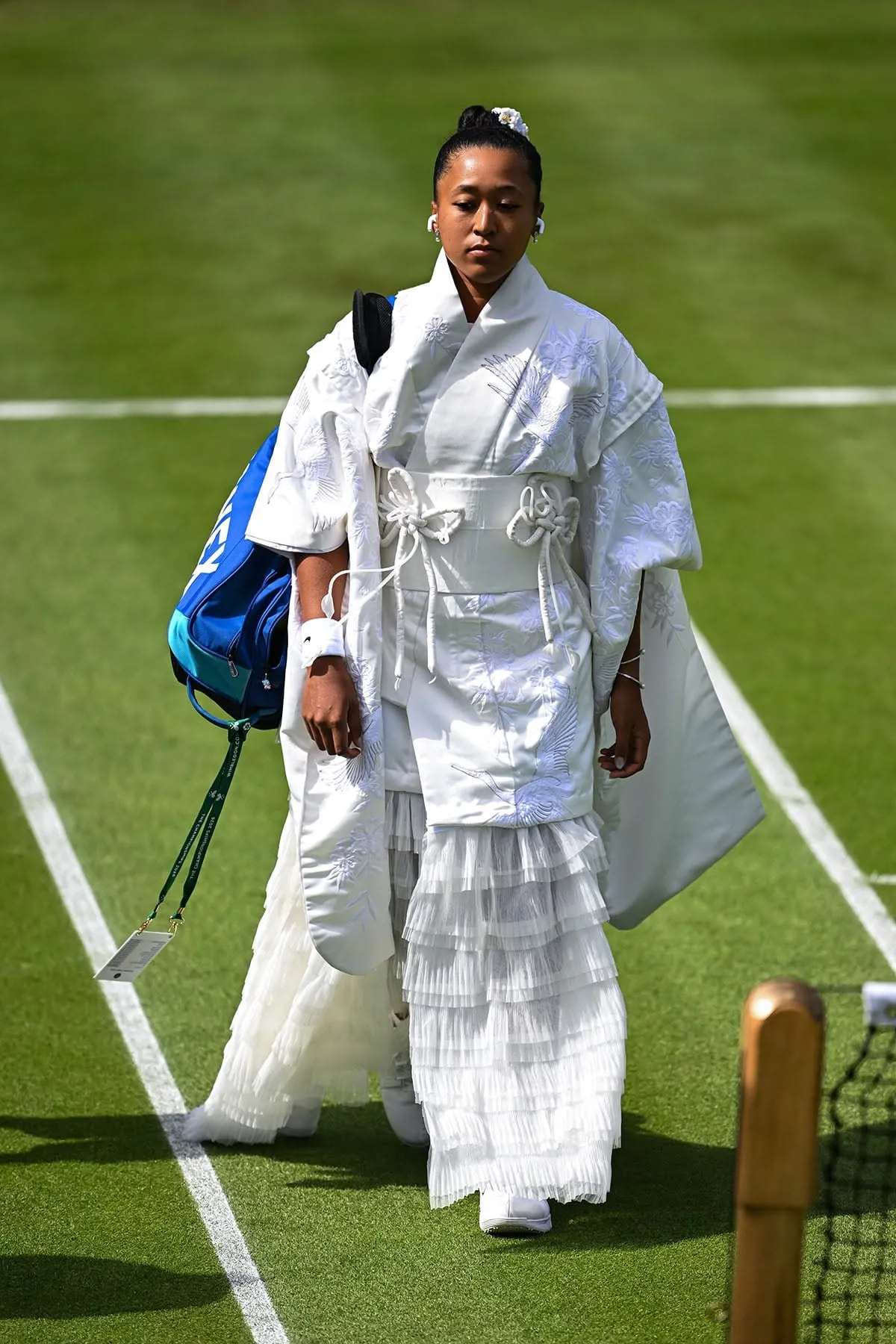
The fashion moment did not exist in isolation from the sporting one. Osaka has consistently balanced the demands of high-level competition with a visible interest in design, collaboration and self-presentation. Her comments about Iverson underscored that the clothing choice was intentional rather than incidental—an acknowledgment of an athlete who expanded the boundaries of what expression in sport could look like.
Style, Identity and Sport
Athletes across disciplines have increasingly treated clothing as an extension of identity. In tennis, where dress codes once imposed strict limits, players have found growing room for creativity, particularly at events that allow more flexibility. Osaka has been among the most consistent in treating each major as a canvas. Previous US Open appearances featured collaborations that blended performance requirements with artistic or cultural statements. The Iverson reference continues that approach by looking outside tennis for inspiration.
Iverson’s influence on sports fashion is well documented. His refusal to conform to traditional athletic dress norms helped open space for subsequent generations of players to incorporate personal style. Osaka’s public appreciation of that legacy places her own choices within a longer conversation about authenticity, visibility and the right of athletes to define how they appear.
Broader Resonance
The attention given to Osaka’s look reflects the dual role many top athletes now occupy. They compete at the highest level while also serving as cultural figures whose choices in clothing, hair and accessories are examined and discussed. For Osaka, these elements have never been secondary. She has used them to signal confidence, heritage, mood and perspective.
By naming Iverson as an influence, she also highlighted cross-sport connections. Basketball and tennis operate in different arenas, yet both have histories of athletes who used style to assert individuality. The night-session arrival at Arthur Ashe became another chapter in Osaka’s ongoing exploration of that territory.
Looking Ahead
Osaka’s first-round appearance set the tone for her tournament both competitively and aesthetically. Whatever the results on court, her willingness to draw from unexpected sources and to speak about the meaning behind her choices reinforces a consistent theme in her career: performance and presentation can coexist without contradiction. The Allen Iverson reference offered a clear example of that philosophy in action—an athlete honouring another athlete’s impact on how style and sport intersect.
In a sport that continues to negotiate the balance between tradition and individuality, Osaka’s approach remains distinctive. Her night-session look at the US Open served as a reminder that clothing can carry history, admiration and personal statement all at once, even under the brightest lights of a Grand Slam stage.
Read more – themenuspark.com , scorematchup.com

