
Introduction
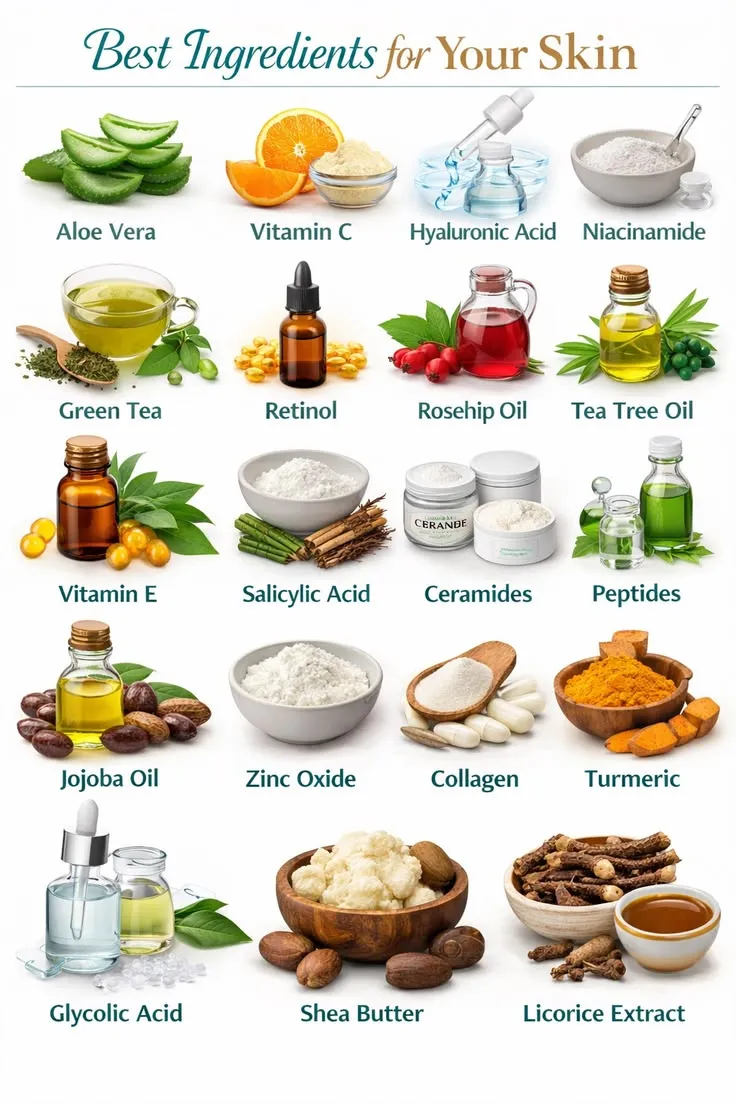
Choosing the right skincare products can be difficult because the market is filled with countless products containing different ingredients and formulas. Understanding the best ingredients for skincare helps people select products that match their skin concerns, whether they want better hydration, acne control, brighter skin, improved texture, or anti-aging benefits. Effective skincare is not about using expensive products or following complicated routines; it is about selecting scientifically supported ingredients that work well with individual skin needs. Ingredients like hyaluronic acid, niacinamide, vitamin C, retinol, ceramides, and peptides have become popular because they provide targeted benefits and help maintain healthy, balanced skin.
Key points to consider before choosing skincare ingredients:
- Identify your skin type and specific concerns.
- Choose ingredients based on proven benefits.
- Avoid using too many active ingredients together.
- Maintain consistency for better long-term results.
- Always include sun protection in your routine.
Why Skincare Ingredients Matter
Skincare ingredients play an important role in determining how effectively a product works. Every ingredient has a specific purpose, from improving hydration and strengthening the skin barrier to reducing signs of aging and managing acne. Understanding ingredient functions helps consumers avoid unnecessary products and create a skincare routine that supports their skin’s natural processes. A balanced combination of effective ingredients can improve skin appearance while protecting it from environmental damage and moisture loss.
Importance of choosing the right skincare ingredients:
- Helps address specific skin concerns.
- Supports healthy skin barrier function.
- Improves hydration and skin texture.
- Reduces the risk of irritation.
- Provides better results from skincare products.
Hyaluronic Acid: The Ultimate Hydration Ingredient
Hyaluronic acid is one of the most widely used moisturizing ingredients in skincare because of its ability to attract and retain water. It is naturally present in the body and helps maintain moisture levels in the skin. This ingredient is suitable for almost all skin types, especially dry and dehydrated skin. Regular use of hyaluronic acid can make the skin feel softer, smoother, and more hydrated while supporting a healthy moisture barrier.
Benefits of hyaluronic acid include:
- Provides deep hydration to the skin.
- Helps reduce dryness and rough texture.
- Makes skin appear smoother and plumper.
- Supports moisture retention.
- Works well with many other skincare ingredients.
Niacinamide: A Multi-Purpose Skincare Ingredient
Niacinamide, also known as vitamin B3, is a versatile ingredient that provides multiple skincare benefits. It helps strengthen the skin barrier, improves moisture retention, and supports a more balanced complexion. It is commonly used in products designed for oily, sensitive, and uneven skin because it can help control excess oil and improve the appearance of pores. Due to its gentle properties, niacinamide is often recommended for people starting their skincare journey.
Benefits of niacinamide include:
- Strengthens the skin barrier.
- Helps balance oil production.
- Improves uneven skin tone.
- Reduces the appearance of enlarged pores.
- Helps calm visible redness.
Vitamin C: A Powerful Antioxidant for Brighter Skin
Vitamin C is a powerful antioxidant ingredient widely used in skincare products for improving dullness and supporting brighter-looking skin. It helps protect the skin from free radicals caused by environmental factors such as pollution and sun exposure. Vitamin C also supports collagen production, which plays an important role in maintaining skin firmness and elasticity. When combined with daily sunscreen, it can become an important part of a healthy skincare routine.
Benefits of vitamin C include:
- Helps brighten dull-looking skin.
- Supports collagen production.
- Protects against environmental stress.
- Improves the appearance of uneven skin tone.
- Promotes a healthier-looking complexion.
Retinol: A Trusted Ingredient for Anti-Aging Care
Retinol is a vitamin A derivative that is highly valued in skincare for its ability to support smoother and younger-looking skin. It encourages skin renewal and helps improve the appearance of fine lines, uneven texture, and signs of aging. Since retinol can increase skin sensitivity, it is usually recommended for nighttime use along with proper sunscreen protection during the day. Beginners should introduce retinol slowly to allow their skin to adjust.
Benefits of retinol include:
- Helps reduce the appearance of fine lines.
- Improves skin texture.
- Supports collagen production.
- Encourages skin renewal.
- Helps create smoother-looking skin.
Ceramides: Essential for Skin Barrier Protection
Ceramides are natural lipids found in the outer layer of the skin that help maintain its protective barrier. They prevent moisture loss and keep the skin hydrated and comfortable. When the skin barrier becomes damaged due to harsh products, weather conditions, or over-exfoliation, ceramide-based products can help restore moisture balance. They are especially beneficial for dry and sensitive skin types.
Benefits of ceramides include:
- Strengthens the skin barrier.
- Prevents moisture loss.
- Helps reduce dryness.
- Supports sensitive skin.
- Keeps skin feeling soft and hydrated.
Salicylic Acid: Effective Ingredient for Acne-Prone Skin
Salicylic acid is a beta-hydroxy acid (BHA) commonly used in skincare products designed for acne-prone and oily skin. It works by penetrating pores and helping remove excess oil and dead skin cells that may contribute to breakouts. This ingredient is especially useful for people dealing with clogged pores, blackheads, and uneven skin texture. However, it should be used carefully to avoid excessive dryness.
Benefits of salicylic acid include:
- Helps unclog blocked pores.
- Removes dead skin cells.
- Controls excess oil.
- Supports clearer-looking skin.
- Helps reduce the appearance of breakouts.
Glycolic Acid: For Smoother and More Even Skin
Glycolic acid is an alpha-hydroxy acid (AHA) that helps exfoliate the surface layer of the skin. It removes dead skin cells and promotes a smoother appearance. This ingredient is commonly used in products designed to improve dullness, uneven texture, and rough skin. Because it is an active exfoliating ingredient, it should be introduced gradually, especially for sensitive skin.
Benefits of glycolic acid include:
- Improves skin texture.
- Helps remove dead skin cells.
- Enhances skin brightness.
- Creates a smoother appearance.
- Supports a more even-looking complexion.
Peptides: Supporting Firm and Healthy Skin
Peptides are small chains of amino acids that are commonly used in anti-aging skincare products. They support the skin’s natural structure and help improve the appearance of firmness and elasticity. Peptides are considered gentle ingredients and can be included in many skincare routines. They work well with moisturizing ingredients to create a nourishing skincare approach.
Benefits of peptides include:
- Supports firmer-looking skin.
- Improves skin smoothness.
- Helps maintain elasticity.
- Provides nourishing benefits.
- Works well with other skincare ingredients.
Natural Ingredients for Skin Health
Natural ingredients are widely used in skincare because of their soothing, moisturizing, and antioxidant properties. Ingredients such as aloe vera, green tea extract, and shea butter are commonly found in products designed to calm and nourish the skin. Although natural ingredients can provide benefits, their effectiveness depends on the overall formula, concentration, and compatibility with individual skin types.
Popular natural skincare ingredients include:
Aloe Vera
Aloe vera is known for its soothing and hydrating properties. It is commonly used in skincare products designed to calm irritated or dry skin.
Benefits:
- Provides gentle hydration.
- Helps soothe uncomfortable skin.
- Supports skin moisture balance.
Green Tea Extract
Green tea extract contains antioxidants that help protect the skin from environmental stress and support healthier-looking skin.
Benefits:
- Provides antioxidant protection.
- Helps calm the skin.
- Supports a refreshed appearance.
Shea Butter
Shea butter is a rich moisturizing ingredient that helps soften dry and rough skin.
Benefits:
- Provides intense moisture.
- Improves skin softness.
- Helps prevent dryness.
How to Choose the Right Skincare Ingredients for Your Skin Type
Choosing the correct skincare ingredients requires understanding your skin type and concerns. Different ingredients provide different benefits, so selecting products based on personal needs can improve results and reduce irritation. A personalized skincare routine should focus on maintaining balance, hydration, and protection.
Recommended ingredients according to skin type:
Dry Skin
Dry skin benefits from ingredients that improve moisture levels and strengthen the skin barrier.
- Hyaluronic acid
- Ceramides
- Glycerin
- Shea butter
Oily Skin
Oily skin requires ingredients that help manage excess oil and prevent clogged pores.
- Niacinamide
- Salicylic acid
- Lightweight moisturizers
Sensitive Skin
Sensitive skin needs gentle ingredients that support protection and hydration.
- Ceramides
- Aloe vera
- Gentle moisturizing ingredients
Aging Skin
Aging skin often benefits from ingredients that support firmness and improve texture.
- Retinol
- Peptides
- Vitamin C
- Hyaluronic acid
Importance of Sunscreen in Every Skincare Routine
Sunscreen is one of the most important parts of any skincare routine because it protects the skin from harmful UV rays. Sun exposure can contribute to premature aging, uneven skin tone, and skin damage. Even the most effective skincare ingredients cannot provide complete protection without proper sun care. Using sunscreen daily helps preserve the benefits of other skincare products and supports long-term skin health.
Why sunscreen is important:
- Protects against UV damage.
- Helps prevent premature aging.
- Supports even-looking skin tone.
- Protects the results of skincare treatments.
- Maintains overall skin health.
Conclusion
The best ingredients for skincare are those that match individual skin concerns and provide proven benefits. Ingredients such as hyaluronic acid, niacinamide, vitamin C, retinol, ceramides, peptides, and exfoliating acids each play an important role in maintaining healthy-looking skin. Instead of using numerous products, focusing on the right ingredients and following a consistent routine can provide better results. Understanding skincare ingredients allows people to make informed choices and build a routine that supports balanced, hydrated, and glowing skin.
