
Abhishek Sharma produced one of the most explosive innings in recent T20 history and then chose one of the calmest ways to mark it. After smashing a record-breaking century off just 30 balls against Afghanistan, the Indian opener sat cross-legged on the pitch in a meditative pose. The gesture immediately drew comparisons with Erling Haaland’s famous celebration. Abhishek later made it clear that the moment had nothing to do with imitation and everything to do with a personal practice that has helped him manage the pressures of elite cricket.
A Record That Redefined Speed
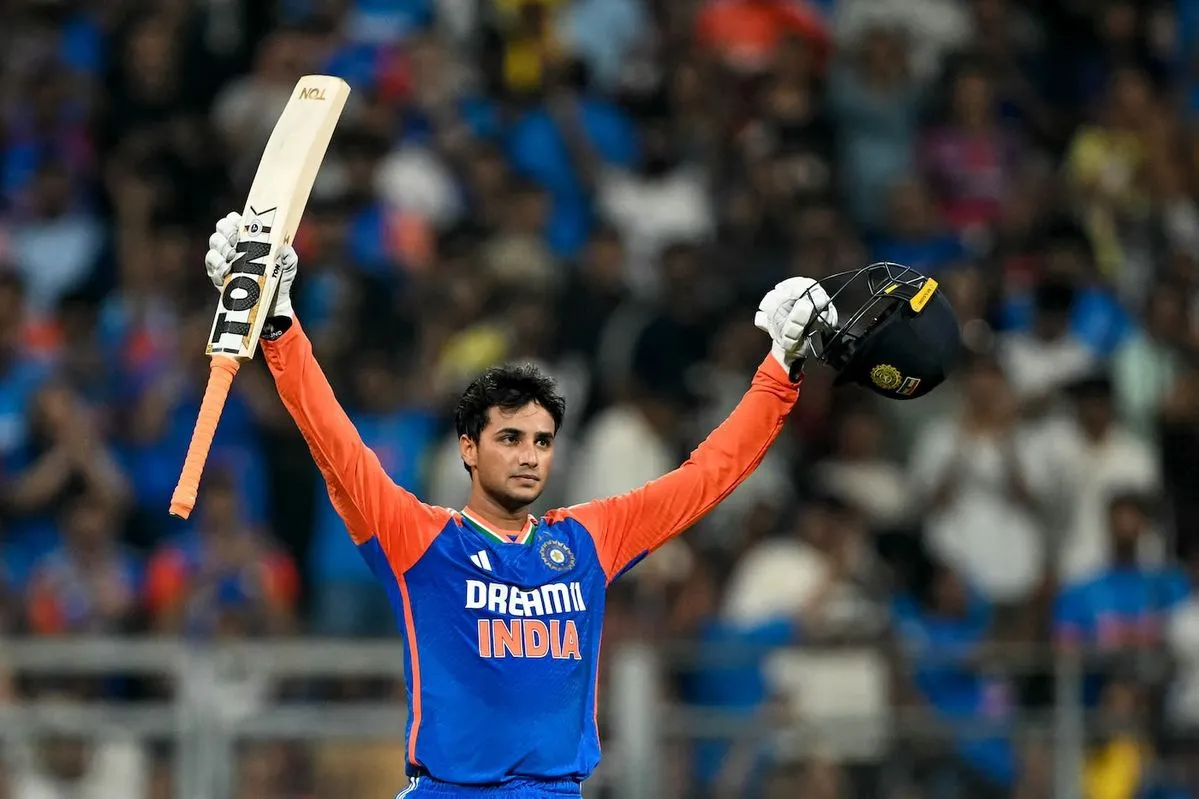
In the third T20I at the Arun Jaitley Stadium in Delhi, Abhishek dismantled the Afghanistan attack with a blistering 108 off 34 deliveries. The century itself came up in only 30 balls, making it the fastest T20 International hundred by a batter from a full-member nation. It also surpassed the previous Indian record held by Rohit Sharma, who had reached the landmark in 35 balls. The innings contained nine fours and 11 sixes and formed the foundation of India’s imposing total of 221 for seven.
India went on to bowl Afghanistan out for 94 and sealed a 127-run victory, completing a clean 3-0 series sweep. While the result was comprehensive, the lasting image from the match was not only the barrage of boundaries but the composed manner in which Abhishek acknowledged his milestone.
The Celebration That Sparked Debate
Upon reaching three figures, Abhishek removed his helmet, placed his bat down and lowered himself into a cross-legged position on the outfield. He sat still with a focused expression, creating a striking contrast to the aggression that had defined his batting. The pose closely resembled the meditative celebration popularised by Manchester City striker Erling Haaland, who has often marked goals by sitting in a similar fashion.
Social media quickly filled with side-by-side comparisons. Many assumed the Indian batter was paying direct tribute to the Norwegian footballer. The visual similarity was undeniable, yet Abhishek’s explanation after the match revealed a different origin.
Rooted in Personal Practice
Speaking to broadcasters, Abhishek clarified that the celebration was intentional and deeply personal. He has been practising meditation regularly for the past several months—approximately six to eight months, according to his own account—as a way to keep his mind stable under the intense demands of international cricket.
“I think meditation really helped me a lot,” he said. He explained that the pose was his way of acknowledging the role the practice has played in his mental preparation. More than a personal ritual, he hoped the visible gesture might encourage other cricketers to consider meditation as a tool for handling pressure. The celebration, in his words, was specifically about highlighting something that has kept him grounded.
His father later reinforced the point, noting that Abhishek wakes early and devotes time to meditation, treating the discipline as an important part of his routine. The ground, the father suggested, holds a special significance for him—almost like a place of focus and respect.
Mental Strength Behind Explosive Batting
Modern T20 cricket places enormous cognitive and emotional demands on batters. The format rewards calculated risk-taking, rapid decision-making and the ability to recover quickly from setbacks. Maintaining clarity amid expectation, crowd noise and the constant scrutiny of form is no small challenge. Abhishek’s recent run of performances suggests he has found methods that help him stay centred even while playing with extreme aggression.
The contrast on the field was telling. For 30 balls he attacked with fearless intent, clearing the boundary repeatedly and forcing the opposition onto the defensive. The moment the landmark arrived, he shifted into stillness. That ability to move between intense external action and internal calm is precisely what many athletes seek through mindfulness practices.
By choosing to mark the achievement with a meditative pose rather than a more conventional show of exuberance, Abhishek turned a personal milestone into a quiet statement about process. Records and strike rates dominate conversation in T20 cricket. His celebration redirected a fraction of that attention toward the less visible work of mental conditioning.
Not an Imitation, but a Shared Language
The resemblance to Haaland’s celebration is understandable. The Norwegian has spoken openly about meditation and the sense of calm it brings him. Both athletes, operating in high-pressure professional environments, have independently arrived at similar physical expressions of the same internal practice. Abhishek’s clarification ensures the moment is understood on its own terms rather than reduced to a copy.
In an era when celebrations are often choreographed for cameras or social media, an unforced gesture rooted in genuine routine carries a different weight. It does not reject flair or joy; it simply situates the achievement within a broader framework of self-management.
A Broader Conversation About Athlete Well-Being
Abhishek’s comments arrive at a time when mental health and performance psychology receive increasing attention across sport. Cricketers at every level face packed schedules, public evaluation and the need to reset quickly between high-stakes games. Techniques such as meditation, breath work and structured reflection are no longer viewed as peripheral. They are increasingly treated as legitimate components of preparation.
By linking his record-breaking innings so visibly to meditation, Abhishek has offered a practical example rather than an abstract endorsement. Young players watching the highlight package now see not only the shots but also the quiet acknowledgment of the method behind the clarity.
Performance and Perspective
The innings itself will be remembered for its speed and power. A 30-ball hundred against international bowling is a rare feat. Completing a series sweep with such dominance adds collective satisfaction to the individual achievement. Yet the post-match conversation has been shaped as much by the celebration as by the statistics.
Abhishek did not diminish the value of the record. He simply refused to let the moment pass without pointing to the internal work that made the external performance possible. In doing so, he added a layer of meaning that extends beyond one match or one series.
Looking Forward
As Abhishek continues to establish himself as a central figure in India’s T20 plans, the balance between explosive output and mental steadiness will remain crucial. His willingness to speak openly about meditation suggests a player who understands that sustained success depends on more than talent and timing alone.
The image of him sitting calmly on the Delhi outfield after rewriting the record books is likely to endure. It captures both the height of his batting confidence and the quiet discipline he credits for helping him stay stable. For those who saw only a resemblance to a footballer’s celebration, his explanation provides the fuller context. The pose was not borrowed. It was earned through months of deliberate practice, and on this night it became a public expression of private focus.
Read more – blessandseemusic.com

