
The Supreme Court on Monday declined to prohibit or restrict a protest march called by the Cockroach Janta Party for 5 September in Delhi. A bench headed by Chief Justice of India Surya Kant, along with Justices Joymalya Bagchi and V. Mohana, stated that it expected all parties to conduct themselves in a responsible, peaceful and lawful manner. The court found no compelling circumstances at this stage to presume that any untoward incident would occur.
Court’s Observations on Law and Order
The bench emphasised that the maintenance of law and order rests with the government and the police. “They are expected to maintain law and order, and the enforcing agency has the responsibility to maintain law and order, saying what is illegal and what is permissible,” the court observed. “We are expecting them to act within that framework. From both sides, we are expecting that they will respect, they will conduct themselves and they will follow the law of the land.”
The judges made clear that they would proceed on the assumption of responsible behaviour unless concrete material indicated otherwise. If any serious situation arose, the petitioner could approach the court immediately. The matter was listed for further hearing on 10 September along with related pending petitions, and notice was issued to the Centre and Delhi Police.
The Petition and Its Concerns
The plea was filed by a retired Delhi Police officer, Rajendra Singh. It sought directions to ensure that large-scale demonstrations or protest marches in sensitive areas of the national capital, including Lutyens’ Delhi, India Gate and adjoining zones, take place only after obtaining the necessary police permissions. The petitioner also requested that any proposed mobilisation in these areas be regulated, postponed or modified until after the BRICS Summit scheduled for 12-13 September, citing security considerations and the presence of international media.
Counsel for the petitioner informed the court that the organisers had not yet applied for formal permission for the procession. The bench, however, declined to issue any interim restraint and advised that concerns about law and order should first be raised with the government and police authorities, who are tasked with handling such matters.
Background of the Planned March
The Cockroach Janta Party has called for a peaceful protest march on 5 September beginning at India Gate and proceeding towards the New Delhi Police Headquarters. The organisation has accused the Centre of failing to honour commitments made on 25 July that led it to withdraw a 36-day agitation against examination irregularities.
That earlier protest, centred at Jantar Mantar, focused on alleged irregularities in examinations, including issues linked to the NEET process, paper leaks and demands for broader reforms in the public examination system. On 25 July, following discussions with Union ministers, the group announced the withdrawal of the agitation after the government indicated acceptance of key demands. These included the withdrawal or closure of FIRs registered against protesters and the provision of compensation to families of students who had died by suicide in connection with examination-related distress.
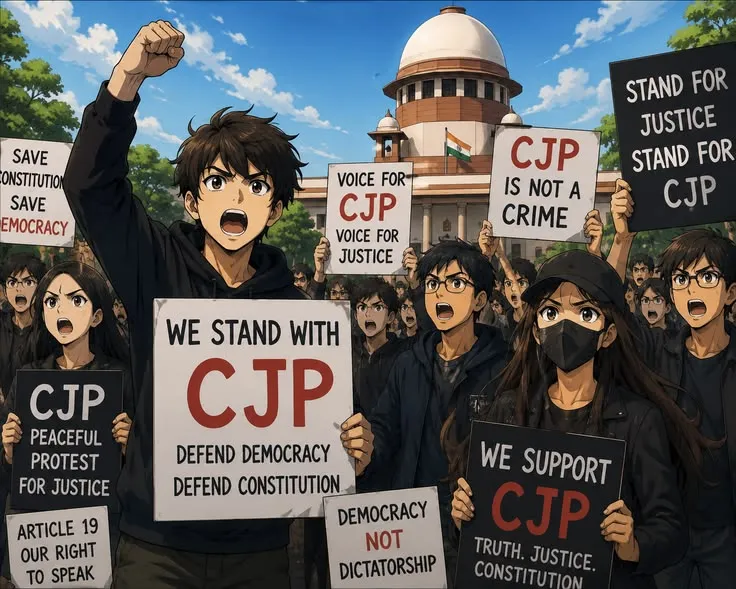
In the weeks that followed, the CJP maintained that the assurances had not been fully implemented. It alleged delays, technical hurdles and a lack of clear, time-bound action on the withdrawal of cases and related relief. The September march has been framed by the group as a response to what it describes as a breach of the understandings that prompted the end of the prolonged sit-in. Families of deceased students and those who alleged police excesses during the earlier agitation are expected to lead the procession, with students and youth organisations invited to join.
Balancing Protest Rights and Public Order
The Supreme Court’s approach reflects a consistent judicial position that the right to peaceful protest is protected, while the responsibility for regulating public assemblies and preventing disorder lies primarily with the executive and police. By refusing a pre-emptive prohibition and stressing expectations of lawful conduct from all sides, the court has left the operational management of the 5 September event to the authorities on the ground.
At the same time, the issuance of notice and the listing of the matter for 10 September keep the judicial process open. Any developments arising from the march, or from the handling of permissions and crowd management, can be examined in the subsequent hearing. The court also indicated that the petitioner could place relevant material before a high-powered enquiry committee earlier constituted to look into allegations of police action during the NEET-related protests.
Wider Context of Student Agitations
The CJP mobilisation forms part of a broader phase of youth-led protests that gained momentum over concerns about the integrity of competitive examinations and the accountability of institutions conducting them. The 36-day agitation had drawn significant attention and ultimately produced political and administrative responses, including the resignation of the then education minister and commitments on case withdrawals and compensation.
The current dispute centres on the pace and completeness of the follow-through on those commitments. The planned march therefore carries both a specific set of demands and a symbolic dimension for participants who view the earlier withdrawal as conditional on government action.
Looking Ahead
With the Supreme Court declining to block the event, attention shifts to the practical arrangements for 5 September. Police and civic authorities will be required to assess any applications for permission, plan routes and deployments, and ensure that the demonstration remains peaceful. Organisers, for their part, face the expectation that the march will adhere to legal limits and avoid disruption beyond the scope of a lawful assembly.
The court’s insistence on responsible conduct from every side underscores a basic principle of democratic protest: the freedom to assemble and express grievances coexists with the duty to respect public order and the rights of others. How both the authorities and the organisers navigate that balance on 5 September will determine whether the day passes without incident or generates fresh legal and political contention.
The matter remains before the Supreme Court for further consideration on 10 September. Until then, the legal position is clear: there is no judicial prohibition on the proposed march, and the primary responsibility for ensuring a peaceful outcome rests with those charged with maintaining law and order and with those organising the demonstration.
Read more – quotewaala.com

