Tesla Builds A Wider Charging Base
Tesla is putting more attention on charging infrastructure as its India business continues developing across major cities. The company has been working to create a wider network of Superchargers, destination chargers, service facilities, and home-charging support for customers. Tesla India entered the Indian passenger vehicle market with the Model Y in July 2025, and charging infrastructure quickly became one of the important parts of its expansion strategy.
Thane has been part of Tesla’s Mumbai-region charging plans from the beginning. In August 2025, Tesla said it planned charging locations in Lower Parel, Navi Mumbai, and Thane alongside its first Mumbai facility at One BKC.
The Thane addition matters because the city sits within the busy Mumbai metropolitan region, where daily commuting and intercity movement create strong demand for convenient EV charging. A Tesla charging point there could give owners another practical option instead of depending completely on home charging facilities.
Thane Becomes An Important Location
The choice of Thane is not especially surprising when looking at how people move around the Mumbai metropolitan area. The city connects residential areas, commercial districts, highways, and several important routes toward Mumbai and other parts of Maharashtra. That makes it useful for an electric vehicle charging network that wants to support both regular driving and longer journeys.
Tesla has previously described its charging strategy as being connected to the lifestyle and travel patterns of customers. The company has been placing charging stations around locations where people work, shop, dine, or travel instead of treating every charger simply as a roadside fuel replacement.
That approach could make a Thane facility particularly useful. Drivers may be able to charge while handling regular errands rather than making a separate trip only for charging. It also gives Tesla another location between the established Mumbai charging infrastructure and routes leading farther into Maharashtra.
Fast Charging Remains The Focus
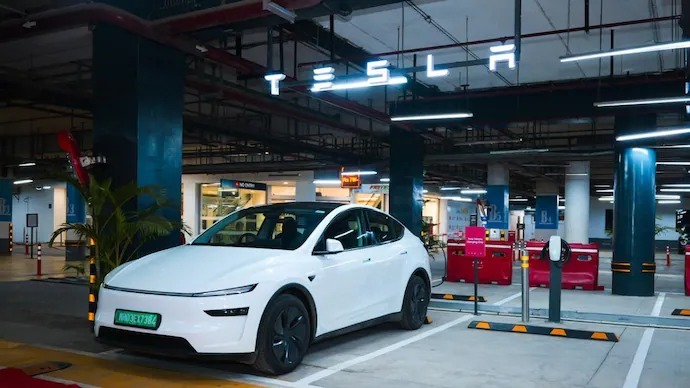
Tesla’s Indian charging rollout includes V4 Superchargers as well as slower destination charging options. The company’s first Indian charging facility at One BKC featured four V4 Supercharging stalls and four destination charging stalls. The Superchargers were rated for charging speeds of up to 250 kW, while the destination chargers offered 11 kW output.
The difference between these two systems is fairly important for everyday users. Fast Superchargers are designed for shorter stops when drivers need to add significant range before continuing their journey. Destination chargers are more suitable when a vehicle is parked for longer periods at places such as malls, hotels, workplaces, or other destinations.
Tesla has also promoted its charging system as a way of reducing range anxiety, which remains one of the major concerns for people considering an electric car in India. A larger network cannot remove every charging problem, but it can make EV ownership feel considerably more predictable for drivers.
Navi Mumbai Shows The Direction
Tesla’s charging expansion around Mumbai has already moved beyond the original BKC location. In April 2026, the company opened an in-mall charging facility at Nexus Seawoods in Navi Mumbai, giving Tesla owners access to four V4 Superchargers and four AC destination chargers.
The Navi Mumbai facility is interesting because it demonstrates the type of location Tesla appears interested in using for its network. Instead of placing every charger in an isolated charging area, the company can integrate charging with places where people already spend time.
The V4 Superchargers at Nexus Seawoods can deliver up to 250 kW, while Tesla says its Supercharging technology can add up to 275 kilometres of range to a Model Y in around 15 minutes under suitable conditions. Actual charging performance can vary depending on several factors, including battery temperature, battery state of charge, and vehicle conditions.
More Cities Are Coming Into View
Tesla’s India charging plans are no longer limited to Mumbai and Delhi. By April 2026, the company said it was preparing Supercharger corridors connecting major cities including Delhi, Chandigarh, Jaipur, Ahmedabad, Mumbai, Pune, Bengaluru, Hyderabad, and Chennai.
This is a much bigger ambition than simply installing chargers near showrooms. Tesla wants the charging network to support movement between important urban centres, which is necessary if electric vehicles are going to become practical for longer-distance travel.
The company also said home charging installation was enabled across 28 states. That matters because public chargers are only one part of EV ownership. For many owners, home charging will remain the main way to keep the vehicle ready for daily use, while Superchargers become more useful for road trips and unexpected longer drives.
Model Y Needs Strong Support
Tesla’s charging expansion is closely connected to its vehicle strategy in India. The Model Y was the company’s first vehicle introduced in the Indian market, with the rear-wheel-drive version starting at ₹59.89 lakh when launched in 2025.
Tesla later expanded its Indian lineup with the Model YL, a three-row six-seat version of the SUV. The company announced the Model YL in April 2026 with a starting price of ₹61.99 lakh and a claimed WLTP range of up to 681 kilometres.
For vehicles positioned at these prices, customers are likely to expect a premium ownership experience beyond the car itself. Reliable charging, software support, service availability, and convenient repair facilities therefore become part of the overall product.
A growing charging network can help Tesla address that expectation while also making its vehicles easier to consider for customers who regularly travel around large metropolitan areas.
Charging Can Change Buyer Confidence
Range anxiety is not unique to Tesla, and India’s charging infrastructure is expanding across many different operators. Still, Tesla’s own network gives the company more control over the charging experience for its customers. The vehicle and charging ecosystem can work together through the Tesla app, which provides charging information and station availability.
That kind of integration can be useful when drivers are planning journeys. Instead of searching randomly for a compatible charger, Tesla owners can use the company’s ecosystem to identify charging locations and monitor charging activity.
It is also important not to assume that a growing Supercharger network makes home charging unnecessary. Public charging can become busy during peak periods, while home charging remains much more convenient for people who have suitable parking and electrical access.
Mumbai Region Gets Stronger Coverage
The addition of Thane fits into a larger Mumbai-area strategy rather than standing alone as an isolated facility. Tesla had identified Lower Parel, Navi Mumbai, and Thane as additional charging locations after launching its first Mumbai charging station at BKC.
Navi Mumbai has already received a Tesla charging hub, while the company has continued discussing broader charging expansion across major Indian cities. This gradually creates a network that could serve different types of journeys, from short urban trips to longer highway travel.
Thane’s position within the metropolitan region could make it especially relevant for customers living outside central Mumbai. It may also help Tesla spread charging demand across several locations instead of concentrating too heavily around a few high-profile sites.
For a relatively young market presence, that kind of network development is significant because charging availability can influence whether potential buyers feel comfortable making the switch to an electric vehicle.
India Expansion Goes Beyond Chargers
Tesla’s India strategy is also moving into service and after-sales support. In April 2026, Tesla said it planned to expand service and body-shop facilities into Bengaluru, Hyderabad, Chennai, and Ahmedabad.
The company has also discussed mobile service, remote diagnostics, delivery hubs, and collision-repair support as part of its wider Indian operation. These additions matter because customers buying premium electric vehicles generally expect convenient support after purchasing the car.
A charging network can bring customers onto the road, but reliable service infrastructure helps keep them there. Tesla therefore appears to be building several parts of its Indian ownership ecosystem at the same time.
The pace of this expansion will be important to watch because India’s market is very different from Tesla’s established markets. Traffic, apartment parking, electricity access, road conditions, and charging demand can all influence how effectively the network performs.
What Thane Could Mean For Tesla
A Tesla charging facility in Thane would represent more than another point on the company’s charging map. It would strengthen coverage across the Mumbai metropolitan region and potentially make Tesla ownership more practical for customers living or working outside central Mumbai.
The bigger story, however, is the company’s attempt to build an interconnected charging ecosystem rather than relying on individual stations. Tesla has already expanded from BKC toward Navi Mumbai and has outlined additional city and highway plans across India.
If this network continues expanding at a steady pace, charging could gradually become less of a barrier for premium EV buyers. That does not mean infrastructure challenges disappear overnight, but each strategically placed station can make electric mobility a little easier.
Final Thoughts On Tesla India
Tesla’s charging expansion shows that entering India’s electric vehicle market requires much more than bringing cars into the country. The company needs dependable charging locations, convenient home-charging support, service centres, and enough network coverage to make longer journeys comfortable. Thane fits naturally into that larger Mumbai-region strategy, while Navi Mumbai and planned highway corridors show the direction of Tesla’s wider plans. As India’s premium EV market develops, charging infrastructure will remain an important factor behind customer confidence and long-term adoption.
Read more :-