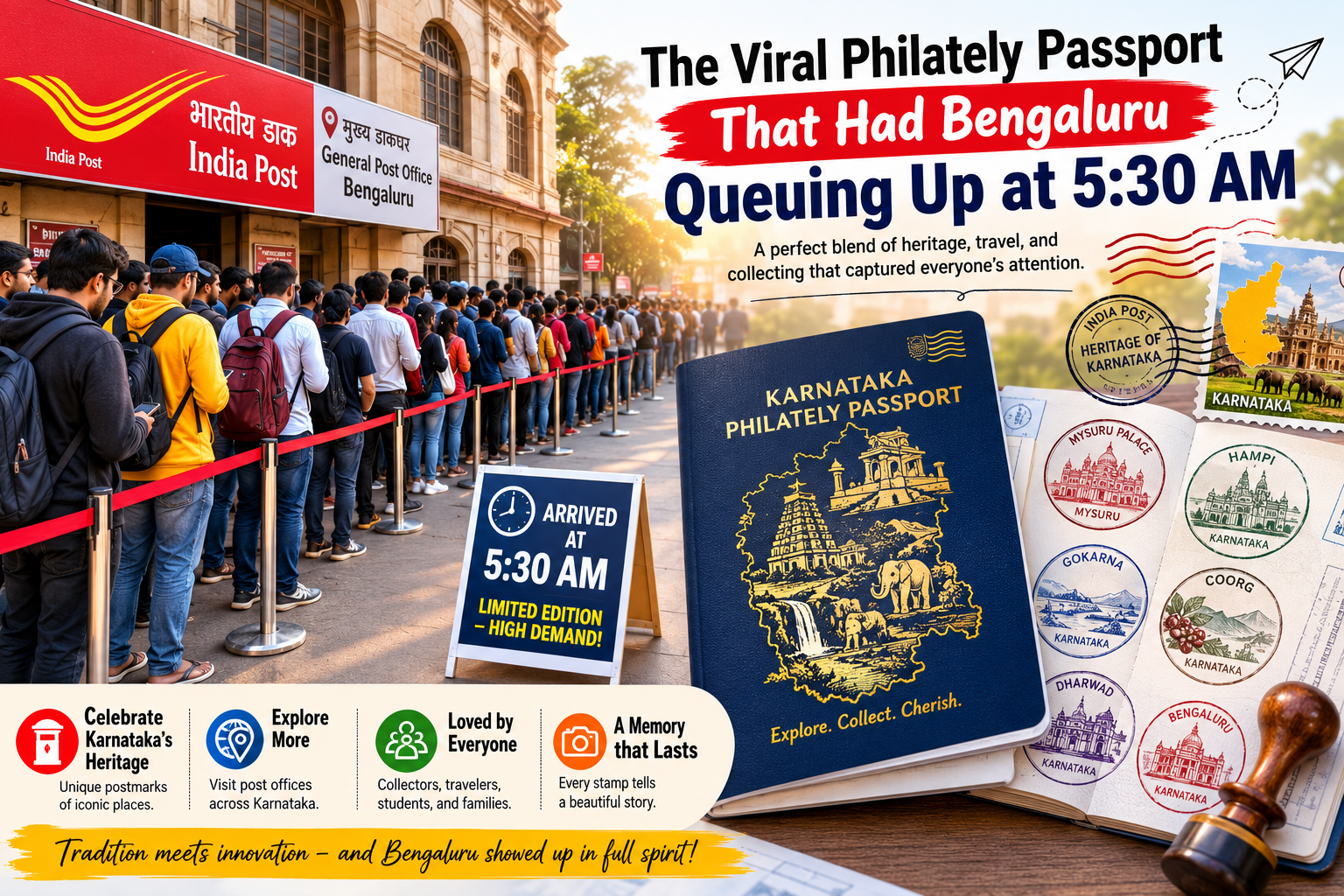
It is not every day that a post office becomes the center of public excitement, but that is exactly what happened in Bengaluru when the Karnataka Philately Passport was released. Long before the doors of the General Post Office opened, hundreds of people had already formed queues, with some arriving as early as 5:30 am to secure one of the limited-edition passports. What made this remarkable was that the crowd was not waiting for concert tickets, a smartphone launch, or a government service—it was gathering for a unique collectible celebrating Karnataka’s rich heritage through philately.
The overwhelming response surprised many and demonstrated that traditional hobbies like stamp collecting still hold a special place in the digital age. The Philately Passport quickly became a viral sensation on social media, attracting not only experienced stamp collectors but also young travelers, families, photographers, and history enthusiasts. Its launch highlighted how innovative ideas can revive public interest in postal services while promoting tourism, culture, and heritage.
What Is the Karnataka Philately Passport?
The Karnataka Philately Passport is a specially designed collectible booklet introduced by the Department of Posts to encourage philately, tourism, and cultural exploration. Although it resembles a travel passport, it is not an official identity document. Instead, it serves as a souvenir that allows owners to collect Permanent Pictorial Cancellations (PPCs) from selected post offices across Karnataka. These unique postmarks feature landmarks, monuments, wildlife, and cultural symbols representing different regions of the state.
The passport transforms stamp collecting into an interactive travel experience. As participants visit designated post offices, they receive special cancellations inside the booklet, creating a personalized record of their journeys. This creative concept combines travel, education, and collecting into a single experience that appeals to people of all ages.
Why Did People Queue Up at 5:30 AM?
The excitement surrounding the Philately Passport was driven by its limited availability and growing popularity on social media. Before the official sale began, news of the collectible had spread rapidly among stamp collectors and travel enthusiasts. On launch day, long queues formed outside Bengaluru’s General Post Office, with many visitors arriving several hours before opening to improve their chances of obtaining one. Tokens were distributed to manage the large crowd as demand exceeded expectations.
Many buyers viewed the passport as more than a collectible. They saw it as a unique opportunity to explore Karnataka differently while participating in a creative initiative by India Post. The enthusiasm reflected the increasing appeal of limited-edition collectibles in today’s digital world.
A Fresh Approach to Promoting Philately
Philately, the hobby of collecting and studying postage stamps and postal history, has existed for generations. However, attracting younger audiences has become increasingly challenging as digital communication replaces traditional mail.
The Philately Passport offers a fresh perspective by making stamp collecting interactive and experience-based rather than simply focusing on collecting individual stamps. Instead of purchasing stamps and storing them in albums, collectors actively travel to different locations and gather commemorative cancellations that tell the story of Karnataka’s culture and geography.
This innovative approach demonstrates how traditional hobbies can evolve while preserving their educational and historical value.
Social Media Played a Major Role
The popularity of the Philately Passport grew rapidly because of social media platforms where users shared photographs, videos, and personal experiences from the launch. Images of long queues outside post offices quickly attracted public attention and generated curiosity among people who had never previously explored philately.
Content creators highlighted the passport’s attractive design, travel concept, and collectible value, encouraging many others to visit post offices themselves. Online discussions further increased demand as collectors shared tips about obtaining the booklet and completing their collections.
The event showed how digital platforms can successfully promote traditional cultural initiatives to modern audiences.
What Makes the Passport Special?
Unlike ordinary souvenirs, the Philately Passport encourages continuous participation. Owners are motivated to visit multiple destinations across Karnataka to collect unique cancellations, making the passport both a travel companion and a collectible.
Each cancellation reflects a specific location’s identity through carefully designed artwork and postal markings. Over time, the passport becomes a personalized record of the owner’s travels throughout the state.
Its combination of heritage, tourism, creativity, and collecting makes it significantly different from conventional travel memorabilia.
Encouraging Tourism Across Karnataka
One of the primary objectives of the Philately Passport is to encourage people to discover Karnataka’s cultural and historical landmarks. Every designated post office represents an opportunity to visit nearby attractions, local markets, museums, temples, natural landscapes, or heritage sites.
Instead of simply purchasing a souvenir, participants actively travel through different districts, contributing to local tourism and gaining a deeper appreciation of the state’s diversity. This initiative transforms postal visits into memorable travel experiences while supporting regional tourism.
Reviving Interest in India’s Postal Heritage
India Post has played an important role in connecting communities for more than a century. Beyond delivering mail, it has preserved historical events, national achievements, wildlife, architecture, and cultural traditions through commemorative stamps.
The Philately Passport reminds people that post offices remain valuable cultural institutions. By combining heritage with modern engagement strategies, India Post has successfully introduced philately to audiences who may never have previously considered stamp collecting.
The initiative demonstrates that postal heritage continues to have relevance even in an increasingly digital society.
The Educational Value of Philately
Stamp collecting has always offered educational benefits beyond its role as a hobby. Through stamps and postal cancellations, collectors learn about geography, history, famous personalities, wildlife, architecture, festivals, scientific achievements, and national events.
The Philately Passport expands these educational opportunities by encouraging participants to physically visit different locations and connect with the stories behind each cancellation. Students, families, and educators can use the passport as an engaging way to explore Karnataka’s cultural heritage while learning about India’s postal history.
Limited Availability Increased Demand
One of the reasons behind the overwhelming response was the passport’s limited initial release. Collectors often value limited-edition items because of their rarity, and the Philately Passport quickly became highly sought after.
Reports indicated that supplies sold out rapidly across several participating cities, leading many enthusiasts to request additional print runs.
While limited availability created excitement, it also highlighted the strong public interest in creative postal initiatives that combine collecting with meaningful experiences.
A New Generation Discovers Stamp Collecting
Traditionally, philately has been associated with older collectors, but the Karnataka Philately Passport has successfully attracted younger audiences. Students, young professionals, travelers, photographers, and social media users have embraced the initiative because it combines exploration, storytelling, and collectible experiences.
Rather than viewing stamp collecting as an outdated hobby, many participants now see it as an enjoyable way to travel, document experiences, and appreciate local culture. This renewed interest suggests that philately can continue evolving to remain relevant for future generations.
Community Enthusiasm and Positive Response
The public response demonstrated the strong emotional connection people still have with meaningful collectibles and cultural experiences. Visitors praised the organization at participating post offices despite the unusually large crowds, while many expressed excitement about beginning their collection journeys.
Online communities dedicated to postcards, stamps, and travel also welcomed the initiative, encouraging newcomers to participate responsibly and avoid purchasing passports at inflated resale prices. Community enthusiasm helped create a positive atmosphere around the launch and strengthened interest in philately across Karnataka.
The Future of Philately in India
The success of the Karnataka Philately Passport suggests that similar initiatives could be introduced in other Indian states. Regional passports featuring local landmarks, heritage sites, wildlife, and cultural attractions could encourage domestic tourism while promoting postal heritage nationwide.
By integrating technology, storytelling, travel, and collectibles, India Post has demonstrated that traditional institutions can innovate successfully without losing their historical identity. Such projects have the potential to inspire greater public participation and preserve philately for future generations.
Conclusion
The viral success of the Karnataka Philately Passport transformed Bengaluru’s post offices into unexpected destinations, with enthusiastic visitors lining up from 5:30 am to secure their copies. More than just a collectible, the passport represents a creative fusion of travel, history, culture, and stamp collecting that has successfully reintroduced philately to a new generation. Its overwhelming popularity proves that thoughtfully designed initiatives can generate widespread public interest even in the digital era.
As people continue collecting unique pictorial cancellations from across Karnataka, the Philately Passport stands as an inspiring example of how heritage institutions can reinvent themselves through innovation. By encouraging exploration, preserving cultural identity, and making stamp collecting interactive, this initiative has shown that even a simple visit to the post office can become the beginning of a memorable journey.