
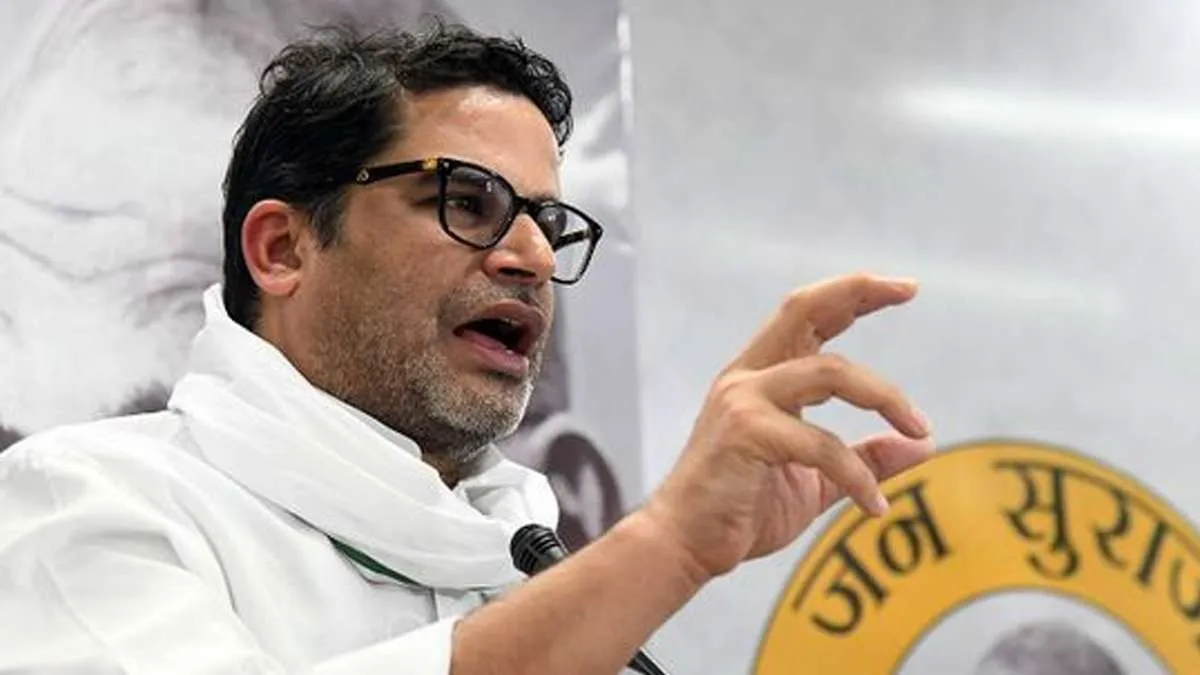
Prashant Kishor’s victory in the Bankipur Assembly bypoll marked a significant breakthrough for his Jan Suraaj Party and a rare setback for the Bharatiya Janata Party in one of its long-held urban strongholds in Bihar. The seat, continuously with the BJP and the Nabin family since 1995, changed hands after Kishor defeated the party’s candidate by a margin of around 19,000 votes. Several interlocking factors explain how the former strategist turned the contest in his favour.
1. A Referendum on New Leadership
The bypoll became the first electoral test for Bihar after the transition in the state’s top leadership. With Nitish Kumar moving to the Rajya Sabha, Samrat Choudhary had assumed the chief minister’s office. Kishor framed the Bankipur contest explicitly as a referendum on this new arrangement. He argued that voters had earlier supported the alliance on the strength of Nitish Kumar’s face and that the subsequent change required popular validation.
This narrative gained traction in an urban constituency sensitive to governance signals. By turning a local bypoll into a broader commentary on the state government’s direction, Kishor elevated the stakes and gave undecided or dissatisfied voters a clear reason to register protest through their ballot.
2. Long-Standing Anti-Incumbency and Local Grievances
Bankipur had remained with the same political family for three decades. Nitin Nabin held the seat for multiple terms after his father, and the continuity eventually generated fatigue. Residents raised recurring complaints about waterlogging, poor roads, traffic congestion, and uneven civic services. Kishor’s campaign deliberately avoided grand welfare promises and instead focused on these everyday problems.
The contrast between a long-dominant local leadership and a candidate emphasising basic urban governance helped convert diffuse dissatisfaction into votes. In a constituency that had delivered large margins to the BJP only months earlier, the accumulation of local discontent proved decisive once an alternative appeared credible.
3. Fragmentation of Traditional Support Bases
A major factor behind the result was the visible cracking of established social coalitions. The Rashtriya Janata Dal’s traditional Muslim-Yadav combination did not hold firm. A portion of these voters drifted toward Jan Suraaj, reducing the Opposition’s ability to consolidate anti-BJP sentiment under its own banner and simultaneously denying the BJP a clearer polarisation advantage.
On the other side, the BJP’s upper-caste base showed uneven consolidation. While the Kayastha community largely stayed with the party, sections of other upper-caste groups, including Brahmins, shifted. Kishor’s own Brahmin identity is believed to have facilitated this movement. The net effect was a splitting of votes that had previously formed a reliable cushion for the BJP in the constituency.
4. Candidate Confusion and Organisational Complacency
The BJP’s campaign suffered an early disruption when its initially nominated candidate withdrew after filing papers. The subsequent replacement created an impression of improvisation in a seat the party had long treated as safe. Combined with reports of relatively weaker booth-level outreach compared with Kishor’s intensive door-to-door effort, the episode reinforced a sense of overconfidence.
Kishor, by contrast, concentrated resources on a single constituency after his party’s broader setbacks in the previous Assembly election. He maintained a visible personal presence, held repeated neighbourhood meetings, and organised volunteers around civic issues. The disparity in ground intensity mattered in a low-turnout bypoll where motivated voters carried greater weight.
5. Youth Support and Issue-Based Appeal
Younger voters formed an important component of Kishor’s coalition. Campaign themes centred on education, employment, migration, and governance resonated with first-time and Gen Z electors who appeared less bound by traditional party loyalties. The timing of the bypoll, coming amid wider youth-related discussions in national politics, further amplified this appeal.
By presenting himself as an outsider to conventional caste arithmetic and focusing on forward-looking concerns, Kishor attracted support that cut across some of the older social blocs. This cross-section of younger and issue-oriented voters provided the additional numbers needed to convert anti-incumbency and fragmented loyalties into a winning margin.
Broader Significance
The Bankipur result does not by itself redraw Bihar’s political map. It does, however, demonstrate that even entrenched urban strongholds can shift when anti-incumbency, leadership transition, social fragmentation, and a focused alternative candidate align. Kishor’s ability to capitalise on cracks in both the BJP and RJD support bases, while the Kayastha vote largely held for the ruling party, illustrates the fluid nature of contemporary electoral coalitions.
For the BJP the defeat invites introspection about complacency in safe seats and the challenges of managing leadership change. For Jan Suraaj it offers the first concrete electoral validation after an earlier statewide setback. For Bihar’s voters it signals that sustained local dissatisfaction, when paired with a credible and visible challenger, can overcome decades of political continuity. The five factors that produced this outcome will likely be studied closely as parties prepare for future contests in the state.
Read more – ballex.net
nestandmane.com
