
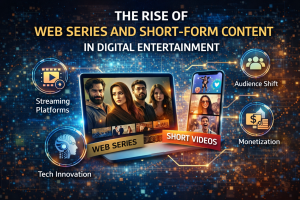
Digital entertainment has undergone a remarkable transformation over the past decade. The dominance of traditional television and cinema has gradually given way to streaming platforms, web series, and short-form video content. Driven by technological advancement, increased internet penetration, smartphone accessibility, and evolving consumer behavior, audiences now demand on-demand, personalized, and bite-sized entertainment. The rise of web series and short-form content is not a temporary trend but a structural shift in how stories are created, distributed, and consumed.
Below is an in-depth exploration of this digital entertainment revolution and the factors shaping its rapid growth.
1. The Shift from Traditional Media to Digital Platforms
The migration from cable television to digital streaming platforms has accelerated significantly in recent years.
Streaming services such as Netflix, Amazon Prime Video, and Disney+ transformed audience habits by offering on-demand content without fixed schedules. Viewers now prefer flexibility — watching what they want, when they want, and on the device of their choice. This convenience has reduced reliance on traditional broadcasting models. Additionally, affordable data plans and smartphone usage have made digital platforms accessible across urban and rural markets, further accelerating this transition. The result is a global audience increasingly aligned with digital-first entertainment consumption.
2. The Explosion of Web Series as a Storytelling Format
Web series have emerged as one of the most powerful storytelling formats in digital entertainment.
Unlike traditional television shows, web series often have shorter seasons, tighter storytelling, and more experimental themes. Creators enjoy greater creative freedom, allowing them to explore bold subjects that may not fit mainstream TV regulations. This flexibility has led to diverse genres, including thrillers, social dramas, dark comedies, and youth-centric narratives. Audiences appreciate the binge-watching format, where entire seasons are released simultaneously, enhancing engagement and emotional connection with characters. The format’s adaptability has made it a cornerstone of modern digital entertainment.
3. The Rise of Short-Form Video Content
Parallel to web series growth, short-form content has experienced explosive popularity.
Platforms such as YouTube Shorts, Instagram Reels, and TikTok have redefined content consumption by promoting videos typically under one minute. These platforms cater to shrinking attention spans and fast-paced lifestyles. Short-form videos offer instant entertainment, quick information, or rapid storytelling, making them highly shareable and engaging. Algorithms personalize feeds based on user preferences, increasing watch time and engagement rates. This format has also lowered the barrier to entry for creators, enabling independent talent to reach global audiences without large production budgets.
4. Changing Audience Behavior and Consumption Patterns
Modern audiences prefer personalized and interactive experiences over passive viewing.
Binge-watching culture has reshaped expectations — viewers now seek continuous narratives rather than weekly episodic waits. Additionally, mobile-first consumption dominates digital entertainment, with many users streaming content primarily on smartphones. Social media integration further amplifies engagement, as viewers discuss episodes, share clips, and create fan communities online. Data-driven personalization ensures content recommendations align with individual preferences, strengthening user loyalty. These behavioral changes have encouraged platforms to continuously adapt their content strategies to meet audience demand.
5. Technological Advancements Fueling Growth
Technological innovation has played a central role in the rise of digital entertainment formats.
High-speed internet connectivity, including widespread 4G and expanding 5G networks, has enabled seamless streaming. Cloud computing allows platforms to store and distribute vast content libraries efficiently. Artificial intelligence enhances recommendation systems, ensuring users discover relevant shows and short videos. Advanced production tools and affordable editing software have democratized content creation, enabling independent filmmakers and influencers to produce professional-quality content. Technology has not only improved accessibility but also elevated content quality across platforms.
6. Monetization Models and Economic Impact
The rise of web series and short-form content has reshaped revenue models in the entertainment industry.
Streaming platforms primarily operate on subscription-based models, advertisement-supported tiers, or hybrid systems. Short-form platforms rely heavily on advertising revenue, brand partnerships, influencer collaborations, and creator monetization programs. This diversified monetization landscape has opened new income streams for creators, production houses, and marketers. Digital advertising expenditure continues to grow globally, with brands investing heavily in influencer marketing and native content integration. As a result, digital entertainment has become a major economic force, contributing significantly to the global media industry.
7. Creative Freedom and Diverse Representation
One of the most impactful aspects of digital entertainment is its support for diverse voices and unconventional narratives.
Web platforms often face fewer censorship restrictions compared to traditional broadcasters, allowing creators to tackle complex social, political, and cultural themes. Independent filmmakers, regional storytellers, and niche creators now have opportunities to reach audiences directly. This has resulted in more inclusive storytelling, featuring varied identities, languages, and perspectives. Audiences benefit from richer representation and global exposure to different cultures. The democratization of storytelling is a defining feature of the digital content revolution.
8. The Role of Social Media in Amplification
Social media platforms play a critical role in the success of web series and short-form videos.
Promotional strategies now heavily rely on digital marketing campaigns, teaser clips, influencer collaborations, and viral trends. Short-form snippets often serve as marketing tools for longer web series, driving viewers to streaming platforms. User-generated content, memes, and fan edits further amplify reach organically. Engagement metrics such as shares, comments, and watch time influence algorithmic visibility, making audience participation essential for success. This synergy between entertainment platforms and social media has created a self-sustaining ecosystem of content discovery and promotion.
9. Challenges in the Digital Entertainment Landscape
Despite its rapid growth, digital entertainment faces several challenges.
Content saturation is a major concern, as thousands of series and videos compete for audience attention. Maintaining originality and quality while meeting algorithmic demands can be difficult for creators. Monetization inequalities also exist, with a small percentage of creators earning the majority of revenue. Additionally, concerns about data privacy, misinformation, and screen addiction are increasingly discussed by regulators and researchers. Platforms must balance innovation with responsible content management to ensure sustainable growth.
10. The Future of Web Series and Short-Form Content
The future of digital entertainment appears highly dynamic and technology-driven.
As artificial intelligence, virtual reality (VR), and augmented reality (AR) evolve, interactive storytelling may become more immersive. Personalized content experiences are expected to deepen as recommendation engines improve. Hybrid formats blending long-form and short-form storytelling could emerge to cater to varying audience preferences. Additionally, regional and vernacular content markets are likely to expand further, supported by global streaming platforms investing in localized production. The continued evolution of consumer habits and digital infrastructure will shape the next phase of this entertainment revolution.
Conclusion
The rise of web series and short-form content marks a fundamental transformation in digital entertainment. Driven by technological innovation, changing audience behavior, and creative freedom, these formats have redefined storytelling and content consumption worldwide. Web series offer deep, binge-worthy narratives, while short-form content provides instant engagement tailored to modern lifestyles.
For creators, marketers, and production houses, understanding this shift is essential for staying relevant in a highly competitive media landscape. As digital platforms continue to evolve, the fusion of technology, creativity, and audience interaction will define the future of entertainment in the years to come.
