
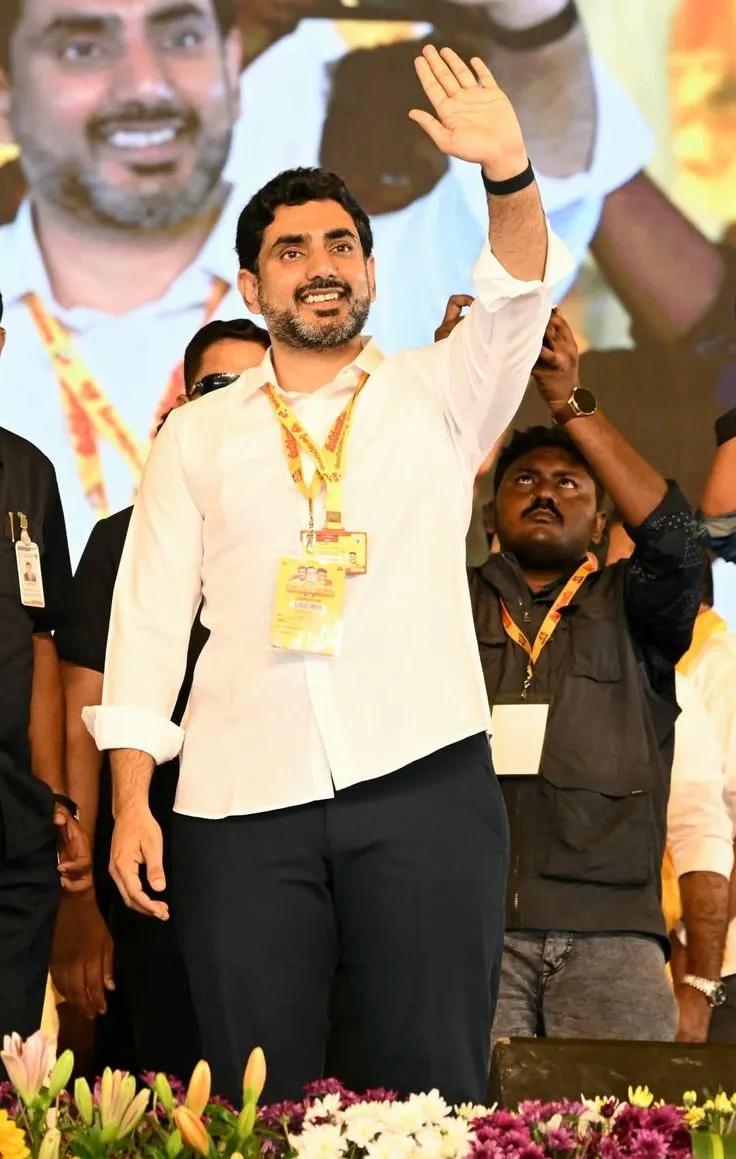
Andhra Pradesh Human Resources Development Minister Nara Lokesh has turned a private family disagreement into a public political critique. In a post on social media, the Telugu Desam Party leader criticised YSR Congress Party chief and former chief minister YS Jagan Mohan Reddy for refusing to allow his niece’s wedding at a family property in Bengaluru. Lokesh linked the episode to broader questions about how Jagan treated women during his five years in power.
The wedding in question is that of YS Anjili Reddy, daughter of Andhra Pradesh Congress Committee president YS Sharmila. Anjili became engaged in September, and the ceremony is scheduled for late November. Sharmila had planned to host the event at Yelahanka Palace, a sprawling family property in Bengaluru. Jagan declined the request, citing security and privacy concerns.
The Family Dispute Behind the Venue Decision
Yelahanka Palace sits on approximately 20 acres and contains residential bungalows associated with different members of the family. Jagan conveyed his position in a letter dated October 9. He wished Anjili happiness and acknowledged the tensions of recent years, yet maintained that a large wedding at the premises where he resides would create serious security risks. A significant number of guests, staff, photographers and event personnel would enter the property, raising privacy and safety issues.
Jagan offered alternatives. He suggested a convention centre or a destination wedding, similar to arrangements made for Sharmila’s son Raja’s earlier wedding. He also indicated that his property at Lotus Pond in Hyderabad remained available if preferred. The letter was later made public by the YSRCP.
The venue dispute sits against a longer backdrop of strained relations between the siblings. Differences over family properties, including shares in certain companies, have persisted for several years and remain under legal adjudication. Their mother has been drawn into efforts to mediate at various points. Political differences have further complicated the personal relationship, with Sharmila leading the Congress unit in the state while Jagan heads the YSRCP.
Lokesh’s Political Framing
Nara Lokesh framed the refusal in cultural and political terms. He began by invoking the traditional role of a maternal uncle. In many families, the mama is expected to bless a niece at her wedding and contribute to making the occasion memorable. Lokesh contrasted that ideal with Jagan’s decision not to permit the use of what he described as the late YS Rajasekhara Reddy’s family home.
He then expanded the point into a critique of Jagan’s governance. “If this is how he treats his own sister and niece, the people of Andhra Pradesh already know how he treated our sisters for 5 years,” Lokesh wrote. The remark sought to connect a private family matter to public perceptions of women’s welfare policies and the treatment of women during the previous administration.
Chief Minister N Chandrababu Naidu had already commented on the controversy days earlier. He accused Jagan of lacking political, moral and family values and compared his stance to that of the mythological figure Kansa, who obstructed a relative’s path. Naidu argued that Sharmila also held a share in the family property and that blocking the wedding reflected a broader pattern of unfair treatment toward his mother and sister.
Political Context and Counterpoints
The exchange fits a familiar pattern in Andhra Pradesh politics, where personal and familial issues frequently become material for public messaging. Opposition parties have long criticised aspects of the previous government’s record on women’s safety and welfare schemes. The current ruling alliance has sought to highlight those criticisms while advancing its own agenda.
The YSRCP has responded by releasing Jagan’s letter and emphasising the security rationale. Party statements have portrayed the criticism as an attempt to divert attention from other issues, including local body election processes. Supporters of Jagan argue that decisions about private residences and personal security remain legitimate even when family members are involved.
From Sharmila’s side, the preference for the Bengaluru property reflected both emotional and practical considerations. Family properties often carry symbolic weight, particularly when associated with a late parent. Holding a major life event at such a location can feel natural to one party and intrusive to another when relations are already strained.
Broader Implications for Public Discourse
The episode illustrates how quickly private disagreements can enter the political arena in a state where leading families have long dominated public life. When those families also head rival political organisations, personal decisions acquire additional layers of interpretation. A refusal framed as security-conscious by one side is read as callous or controlling by the other.
Lokesh’s intervention keeps the focus on the contrast between private conduct and public claims. By tying the wedding venue decision to the previous government’s record on women’s issues, he attempts to convert a family story into a governance critique. Whether voters accept that linkage remains a political question. What is clear is that the controversy has given the ruling party fresh material to question the former chief minister’s consistency and values.
As the wedding date approaches, the practical question of venue will be resolved one way or another. The political conversation, however, is likely to continue. In Andhra Pradesh, family, property and power have rarely remained entirely separate spheres. The current exchange shows that pattern remains firmly in place.
Read more – Marathidailyquotes.com
