
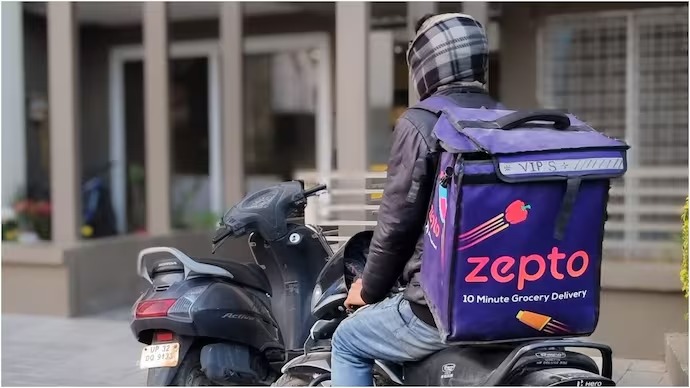
Zepto has increased the minimum order value required for free delivery from ₹149 to ₹199 in select cities and PIN codes. The Zepto decision puts the quick-commerce platform closer to Blinkit and Swiggy Instamart, which have similar thresholds in several markets.
For customers who regularly use quick-commerce apps for tiny, urgent purchases, this change could make a noticeable difference. A packet of snacks, a forgotten kitchen item, or one small household product may no longer feel quite as cheap to order online. The basic idea is simple, but the impact is slightly more complicated because delivery charges, handling fees, discounts, and demand-based pricing can all affect the final bill.
Zepto Changes Its Free Delivery Rule
Zepto has raised its minimum order value for free delivery to ₹199 from the earlier ₹149 threshold. Reports indicate that the change is being applied in select cities and PIN codes rather than necessarily appearing identically for every customer.
That means customers placing orders below ₹199 may now have to pay a delivery charge instead of receiving delivery without that particular fee. One reported example showed a ₹30 delivery fee on a small-value order, although the exact charges can depend on the location and order conditions.
The change also matters because ₹199 is not necessarily the highest threshold customers could see. During periods of particularly strong demand, reports say the minimum order value for free delivery can rise to ₹299.
Small Orders Could Become Costlier
The biggest immediate effect is likely to be felt by people who use quick-commerce services for very small baskets. These platforms became popular partly because customers could order a few items without planning a full grocery trip. A higher free-delivery limit changes that convenience equation.
Suppose someone needs toothpaste worth ₹120 and does not want anything else. Under the earlier ₹149 threshold, the customer was already below the free-delivery requirement, but the new ₹199 limit creates an even larger gap. Adding another useful product can make sense, while paying a delivery fee for a tiny order may feel less attractive.
This could encourage shoppers to combine several requirements into one larger basket. Instead of ordering immediately whenever something is needed, customers may wait until their cart reaches the required amount. That small behavioural change is exactly the kind of outcome quick-commerce companies can use to improve order economics.
Why Zepto Is Raising The Threshold
The move comes at a time when India’s quick-commerce companies are paying much more attention to profitability and order-level economics. Delivering a low-value basket quickly still involves several expenses, including dark-store operations, packaging, delivery personnel, technology infrastructure, and customer incentives.
A ₹70 or ₹100 order does not automatically become cheap to fulfil simply because the basket is small. In fact, the delivery cost can become a larger proportion of the transaction value when customers purchase only one or two inexpensive products.
Analysts have therefore viewed the higher minimum order value as a way to encourage bigger baskets and improve contribution economics. Kotak Institutional Equities described the move as an attempt by Zepto to rein in quarterly burn, while also suggesting that competitors could benefit from the change.
Zepto Now Matches Major Rivals
The ₹199 threshold puts Zepto broadly alongside Blinkit and Swiggy Instamart on free-delivery requirements. That makes the change more interesting because customers may find fewer major differences between these platforms when comparing small orders.
Quick-commerce competition has traditionally focused heavily on delivery speed, discounts, product availability, and convenience. Minimum order values are becoming another part of that competition, especially as companies try to reduce the cost of servicing low-value transactions.
For customers, this means simply checking which application delivers fastest may not always be enough. The final payable amount can matter more than the advertised product price. A product costing ₹150 may look cheaper on one app, but additional delivery or handling charges can change the final comparison.
Demand Can Change Your Minimum
One unusual part of the new policy is that the threshold may not always remain fixed at ₹199. During high-demand periods, the required order value can reportedly increase to ₹299.
This introduces a demand-based element into the free-delivery system. In simple terms, customers could potentially face different requirements depending on when they place an order and how busy the delivery network is at that time.
For consumers, this makes checking the cart before payment more important than relying on a fixed assumption. The app’s checkout screen is the practical place to confirm whether the order qualifies for free delivery and what other charges have been added.
The change may also allow Zepto to manage periods when delivery capacity is under heavier pressure. Rather than offering the same free-delivery condition throughout the day, the company can potentially use order thresholds to influence customer behaviour.
Bigger Baskets Could Help Zepto
The business logic behind a higher minimum order value is fairly straightforward. If customers add more products before checking out, the average basket value can increase. That gives the company more revenue from each delivery while the basic fulfilment process does not necessarily increase at the same rate.
Imagine two customers ordering separately for ₹100 each. If those orders can instead become one ₹200 order, the platform has potentially moved two small transactions into one larger basket. The economics can look better even though the customer’s overall spending has not changed dramatically.
Of course, customers may not always respond this way. Some shoppers could simply switch to another platform, postpone the purchase, or decide that visiting a nearby store is easier. That is the trade-off Zepto has to manage while changing its pricing structure.
Competitors May Get An Opening
The move could create an opportunity for Blinkit and Swiggy Instamart if some Zepto customers dislike the higher threshold. Kotak Institutional Equities has suggested that competitors could see stronger net order value growth and potentially gain some market share as a result.
However, switching between quick-commerce applications is already relatively easy for many consumers. Customers can compare product prices, availability, coupons, delivery charges, and estimated arrival times before choosing where to place an order.
That makes the competitive picture more complicated than simply saying a higher minimum will push customers away. If all three major platforms have broadly similar free-delivery thresholds, the decision may instead come down to product pricing, membership benefits, delivery reliability, discounts, and local inventory.
What Customers Should Check Now
Customers using Zepto for frequent small purchases should pay closer attention to the final checkout amount. The ₹199 threshold is specifically important because an order below that amount may no longer qualify for free delivery under the updated conditions.
It can make sense to combine genuinely needed products when the basket is only slightly below the threshold. Adding unnecessary items simply to avoid a delivery charge, however, does not necessarily save money.
Customers should also check whether handling fees, platform charges, taxes, discounts, or other applicable fees are included in the final amount. Free delivery does not automatically mean the entire order comes without additional charges.
Another useful habit is comparing the same basket across different quick-commerce applications. A lower product price on one platform can sometimes be cancelled out by additional charges at checkout, while another platform may offer a better overall final price.
Quick Commerce Enters A New Phase
The latest Zepto move reflects a broader change in India’s quick-commerce market. Earlier, the biggest attraction was aggressive convenience, rapid delivery, and heavy promotional offers. Now companies are increasingly trying to make each order financially healthier while continuing to protect customer demand.
That shift does not mean quick commerce is becoming irrelevant. Quite the opposite, the industry is becoming more mature and companies are looking more closely at how customers actually use these services.
Higher minimum order values are one way to push customers toward larger baskets without directly increasing the listed prices of products. But there is a limit to how much extra friction customers will accept.
If shoppers continue finding enough value in speed and convenience, the ₹199 threshold may become a normal part of quick-commerce shopping. If customers start feeling that small orders are no longer worthwhile, platforms will have to rethink how delivery pricing works.
Final Takeaway For Shoppers
Zepto’s increase in the free-delivery minimum from ₹149 to ₹199 marks another important change in India’s quick-commerce pricing landscape. The new threshold can make small purchases more expensive, while larger baskets may become relatively more attractive. During high-demand periods, the threshold can reportedly rise further to ₹299, so customers should check the final checkout conditions before placing an order.
For Zepto, the strategy is mainly about improving order economics and encouraging healthier basket sizes. For shoppers, it simply means being more careful about the total bill rather than looking only at individual product prices. As quick commerce continues evolving, comparing final costs across platforms can help customers get better value. Stay informed about these pricing changes and check the complete cart total before confirming your next quick-commerce order.
Read More :- DigitalsDynamo.com
