
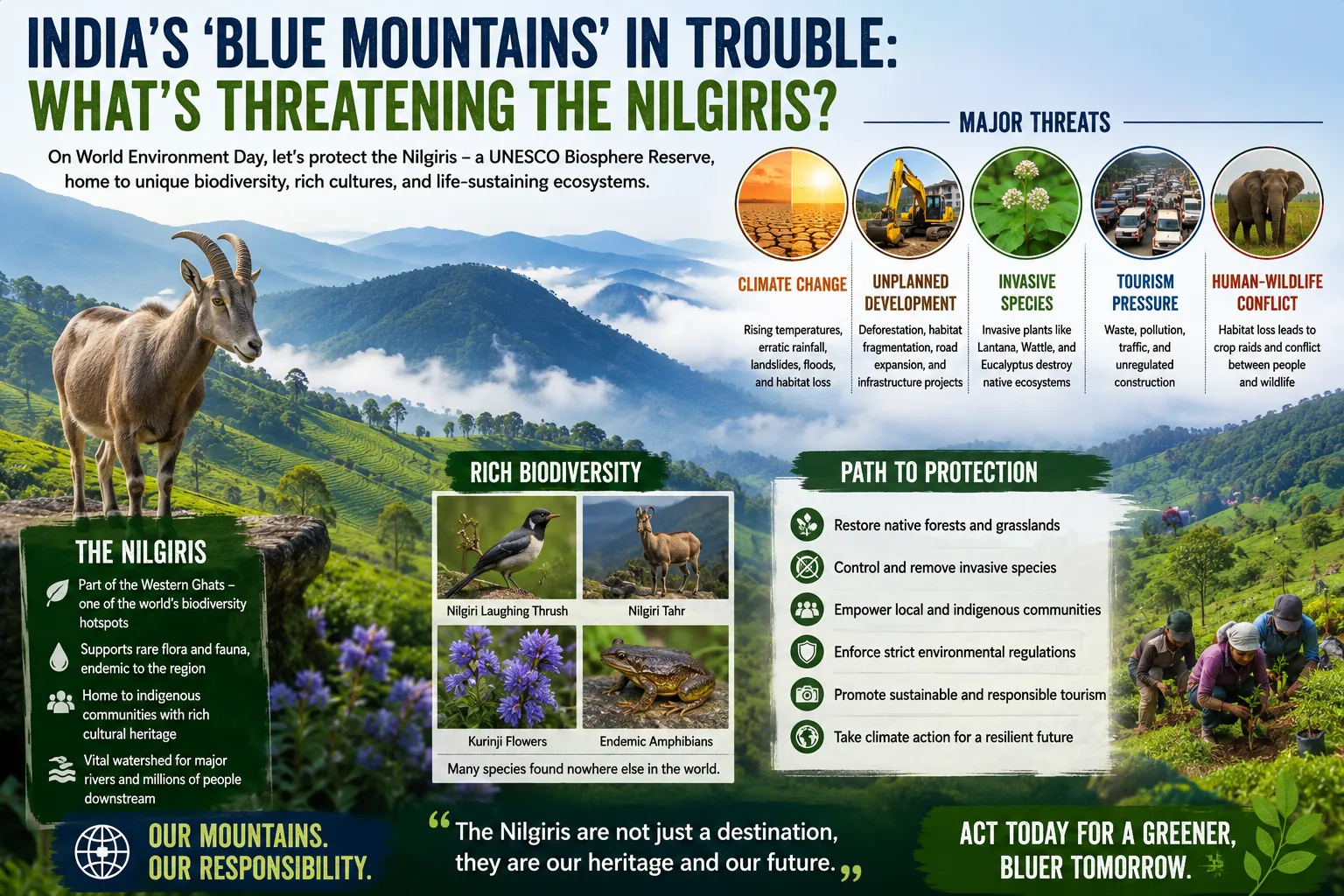
On World Environment Day, the Nilgiris — India’s enchanting “Blue Mountains” — call for urgent attention. Renowned for their mist-shrouded peaks, rolling tea estates, and extraordinary biodiversity, this mountain range in Tamil Nadu has long symbolized natural splendor within the Western Ghats. As India’s first UNESCO Biosphere Reserve, established in 1986, the Nilgiris represent a globally significant ecosystem. Yet today, they face mounting threats from climate change, human activities, and ecological disruptions that jeopardize their future.
The Nilgiris are more than a scenic hill station; they are a living laboratory of ecological interdependence and cultural heritage. Understanding the pressures they face is essential for preserving not just this region but the broader environmental health of peninsular India.
The Unique Charm and Ecological Importance of the Nilgiris
The name “Nilgiris” evokes the bluish haze that often blankets the hills, created by the flowering of the Kurinji shrub or the perpetual mist. The landscape is defined by its distinctive Shola forests — pockets of evergreen, stunted trees — alternating with vast montane grasslands. This mosaic supports exceptional biodiversity, including several endemic and endangered species.
The region is home to the Nilgiri Tahr, one of the few mountain goats in South India, along with the Nilgiri Laughing Thrush, numerous orchids, amphibians, and butterflies found nowhere else. Indigenous communities like the Todas, with their unique pastoral traditions, Badagas, and Irulas have coexisted with this environment for generations. Ecologically, the Nilgiris function as a critical watershed, feeding major rivers and sustaining water security for millions downstream.
Climate Change: Altering the Blue Mountains
Climate change stands as one of the most significant threats. Over recent decades, the Nilgiri Biosphere Reserve has experienced a noticeable rise in average temperatures and shifts in rainfall patterns. These changes have disrupted seasonal cycles, leading to more frequent extreme weather events.
Prolonged dry periods followed by intense rainfall have increased the incidence of landslides, flash floods, and soil erosion. The natural Shola-grassland system, which once acted as a sponge regulating water flow, is losing its effectiveness. As a result, streams and rivers show greater variability in flow, affecting both wildlife habitats and agricultural communities. Projections indicate that suitable habitats for high-altitude species like the Nilgiri Tahr could shrink considerably in the coming years due to warming trends.
Human Activities and Developmental Pressures
Unplanned development significantly exacerbates the situation. The conversion of tea estates and natural grasslands into residential projects, resorts, and commercial establishments has caused widespread habitat fragmentation. Tourism, while economically important, brings challenges such as waste accumulation, increased vehicle traffic, and construction in ecologically sensitive zones.
Road widening and infrastructure projects often cut through vital wildlife corridors, isolating populations and increasing human-wildlife conflict. Elephants, wild boars, and other animals frequently raid crops as their natural foraging areas diminish, leading to economic losses for farmers and occasional tragic encounters.
The Invasive Species Challenge
Invasive alien plants represent a silent but devastating threat. Species such as Lantana camara, Australian wattle, and eucalyptus have spread rapidly across the hills. These aggressive invaders outcompete native vegetation, alter soil chemistry, and reduce biodiversity. In many areas, they have transformed productive grasslands into impenetrable thickets, affecting both wildlife and the livelihoods of pastoral communities.
The shallow root systems of many invasive species also contribute to greater soil instability during heavy rains, worsening erosion problems.
Impacts on Biodiversity and Local Communities
The cumulative effect of these threats is evident in declining populations of key species. The Nilgiri Tahr now survives in fragmented pockets, making it highly vulnerable. Amphibians and stream-dependent organisms suffer from changing water quality and temperature.
For local residents, especially indigenous groups, the changes threaten traditional knowledge systems, cultural practices, and economic stability. Declining agricultural yields, water scarcity during dry spells, and loss of forest resources create hardships that ripple through communities.
Reasons for Hope: Conservation Initiatives
Fortunately, dedicated efforts are underway to reverse some of the damage. Community-based restoration projects focus on removing invasive species and replanting native Shola and grassland vegetation. Several initiatives have successfully revived streams and brought back birds and small mammals to restored areas.
Collaborative programs involving forest departments, NGOs, scientists, and local people emphasize ecological restoration using indigenous knowledge. Sustainable tourism models that limit visitor numbers in sensitive zones and promote responsible practices are also gaining traction. Creation and protection of wildlife corridors remain key priorities for maintaining connectivity between habitats.
The Road Ahead: Collective Responsibility
Protecting the Nilgiris requires integrated action on multiple fronts:
- Strict enforcement of environmental regulations to prevent unsustainable development.
- Large-scale, science-driven invasive species management programs.
- Promotion of climate-adaptive restoration techniques.
- Empowerment of local and indigenous communities in decision-making.
- Awareness campaigns that encourage responsible tourism and consumption choices.
On World Environment Day, the story of the Nilgiris serves as both a warning and a call to action. Every stakeholder — from policymakers and businesses to travelers and ordinary citizens — has a role in safeguarding these mountains.
Final Thoughts
The Blue Mountains, once a symbol of pristine wilderness and ecological harmony, now face an uncertain future. Climate change, habitat loss, invasive species, and developmental pressures are testing the resilience of this UNESCO Biosphere Reserve. However, with timely intervention, community participation, and sustained commitment, there remains a genuine opportunity to restore and protect this irreplaceable natural treasure.
The Nilgiris teach us that mountain ecosystems are delicate yet incredibly important. Their preservation is vital for biodiversity conservation, water security, cultural continuity, and climate regulation. As we reflect on World Environment Day, let the challenges facing these misty hills inspire meaningful change in how we interact with nature.
The future of the Blue Mountains depends on the choices we make today. By prioritizing sustainability, respecting ecological limits, and supporting conservation efforts, we can help ensure that the Nilgiris continue to inspire awe and provide life-sustaining services for generations to come. The time to act is now.
