
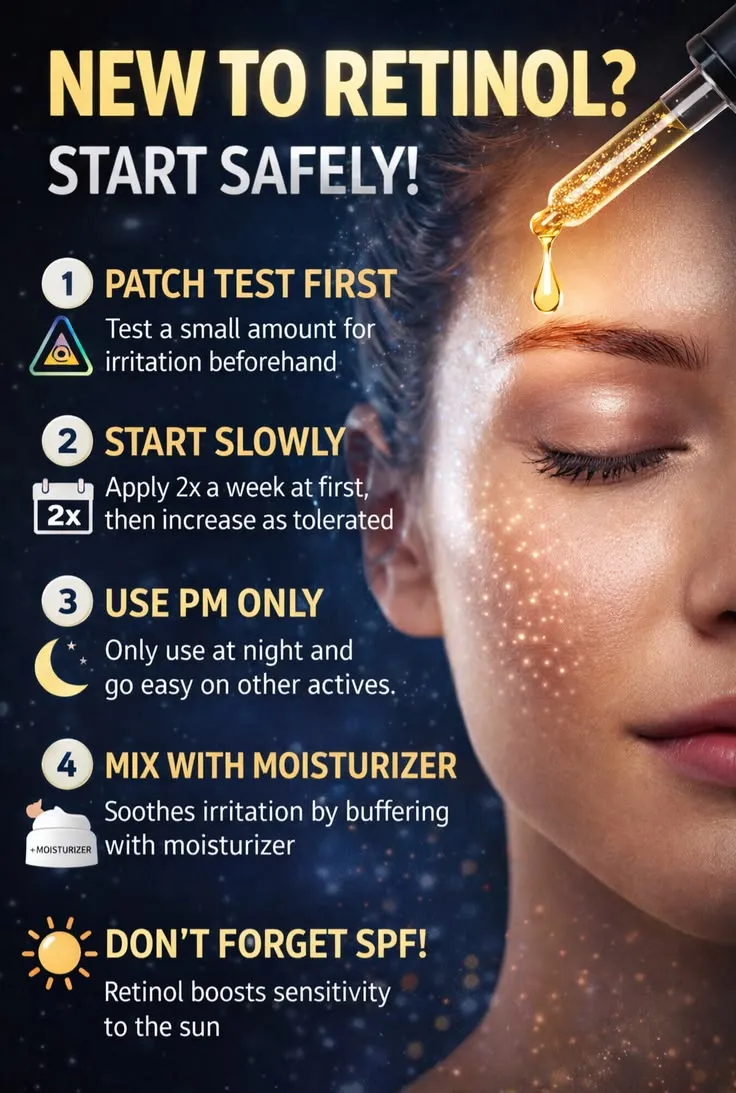
Retinol, a derivative of vitamin A, is widely regarded as one of the most effective skincare ingredients for anti-aging, acne control, and improving skin texture. It works by accelerating cell turnover, boosting collagen production, and unclogging pores. However, its potency often comes with side effects like redness, peeling, dryness, and irritation — commonly known as “retinization.” The good news is that with the right approach, most people can enjoy retinol’s benefits while minimizing discomfort. Here are the best, practical tips to use retinol safely and effectively.
1. Start Low and Slow
The biggest mistake beginners make is starting with a high-strength retinol too frequently. Begin with a low concentration (0.1% to 0.3%) and use it only once or twice a week at night. This allows your skin to build tolerance gradually. Over time, you can increase frequency to every other night, and eventually to nightly use. Rushing the process almost always leads to irritation.
2. Always Perform a Patch Test
Before applying retinol to your face, test it on a small area like your inner wrist or jawline for 3–4 consecutive nights. This helps identify any adverse reactions early. If you experience severe redness or itching, discontinue use and consult a dermatologist.
3. Apply Retinol Correctly at Night
Retinol breaks down when exposed to light, so it should always be used at night. After cleansing your face, wait 20–30 minutes until your skin is completely dry. Apply a pea-sized amount of retinol evenly across your face, avoiding the delicate eye area, lips, and nostrils. Starting with dry skin reduces penetration intensity and lowers irritation risk.
4. Master the Sandwich Method
For sensitive or dry skin types, use the “sandwich method” — apply a lightweight moisturizer first, followed by retinol, and seal it with another layer of moisturizer. This creates a buffer that reduces direct contact with the active ingredient while still delivering benefits. As your skin adapts, you can transition to applying retinol directly on clean skin.
5. Prioritise Hydration and Barrier Repair
Retinol can compromise the skin barrier, leading to dryness and sensitivity. Counter this by using a rich, ceramide-based moisturizer every night. Ingredients like hyaluronic acid, niacinamide, centella asiatica, and squalane are excellent for soothing and repairing the skin. Never skip moisturizer, even on nights you don’t use retinol.
6. Use Sunscreen Religiously During the Day
Retinol increases skin’s sensitivity to UV rays, raising the risk of sunburn and pigmentation. Apply a broad-spectrum SPF 30 or higher every morning, even on cloudy days or when staying indoors. Reapply every two to three hours if outdoors. This step is non-negotiable for preventing further skin damage while using retinol.
7. Avoid Mixing with Harsh Ingredients Initially
In the beginning phase, avoid combining retinol with other strong actives such as AHAs (glycolic, lactic acid), BHAs (salicylic acid), benzoyl peroxide, or high-strength vitamin C. These combinations can overwhelm the skin. Once your skin has built tolerance (usually after 8–12 weeks), you can carefully introduce them on alternate days or under professional guidance.
8. Be Patient During the Purging Phase
Many users experience “purging” — a temporary worsening of acne, flaking, or redness — in the first 4–6 weeks. This happens as retinol brings underlying impurities to the surface. Distinguish purging from true irritation: purging is usually limited to areas where you normally break out. Stay consistent but reduce frequency if irritation becomes too intense.
9. Choose the Right Formulation and Strength
Not all retinols are equal. Beginners should opt for gentle formulations such as retinol esters, encapsulated retinol, or retinaldehyde. Those with sensitive skin may benefit from over-the-counter options with soothing additives. Prescription-strength tretinoin should only be used under dermatological supervision.
10. Listen to Your Skin and Adjust Accordingly
Pay close attention to how your skin responds. If you notice persistent redness, excessive peeling, or burning, pause use for a few days and focus on recovery with gentle, hydrating products. Factors like weather, hormonal changes, and stress can affect tolerance. Adjust your routine seasonally — using retinol less frequently during dry winters, for example.
Additional Supportive Habits
- Use a gentle, non-foaming cleanser to avoid stripping the skin.
- Avoid physical exfoliants and harsh scrubs while using retinol.
- Incorporate antioxidant serums (like vitamin C in the morning) once tolerance is built.
- Stay hydrated and maintain a healthy diet rich in antioxidants to support skin from within.
When to Consult a Professional
If irritation persists despite following these tips, or if you have conditions like eczema, rosacea, or very sensitive skin, consult a dermatologist. They can recommend personalised strengths, prescription alternatives, or buffering techniques tailored to your skin type.
Long-Term Mindset for Success
Using retinol successfully is about consistency and patience rather than speed. Most people see noticeable improvements in skin texture, fine lines, and brightness after 3–6 months of proper use. The initial discomfort is temporary, but the long-term benefits — smoother, firmer, and clearer skin — are worth the careful introduction.
By starting slowly, prioritising hydration, protecting your skin from the sun, and respecting your skin’s limits, you can harness retinol’s powerful benefits while keeping irritation to a minimum. A thoughtful, gradual approach transforms retinol from a potentially irritating ingredient into a trusted skincare ally for healthier, more radiant skin.
Read more – medianewsqo.com
