
For decades, India’s hill stations have been the preferred escape route for people looking to beat the scorching summer heat. The promise of cool weather, mountain views, fresh air, and a slower pace of life continues to attract millions of travellers every year. However, the growing popularity of these destinations has created a new challenge—overtourism.
As temperatures soar across northern and central India, thousands of tourists head to the hills simultaneously. What should be a peaceful mountain retreat often turns into hours of traffic congestion, overcrowded streets, packed hotels, and strained local infrastructure. In recent years, several popular hill stations have struggled to cope with the seasonal influx, making the travel experience less enjoyable for visitors and residents alike.
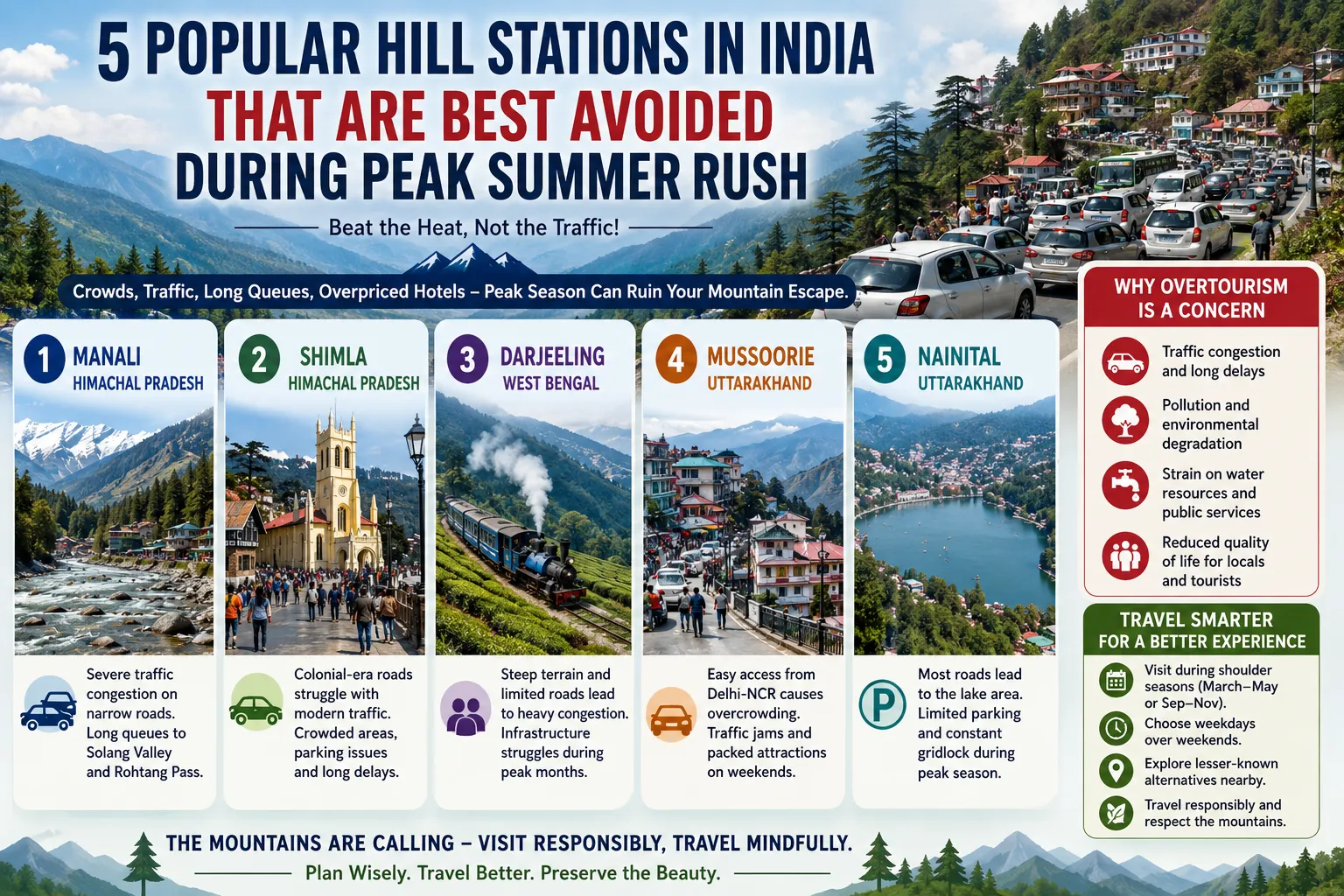
If you are planning a summer getaway, it may be worth reconsidering a visit to some of India’s most crowded hill destinations during peak season. Here are five popular hill stations that are best avoided during the busiest summer months.
1. Manali, Himachal Pradesh
Manali remains one of India’s most loved hill stations, attracting honeymooners, families, backpackers, and adventure enthusiasts throughout the year. Nestled in the picturesque Kullu Valley, the town offers stunning mountain scenery, riverfront views, and access to attractions such as Solang Valley and Rohtang Pass.
However, during peak summer, Manali often becomes a victim of its own popularity. Reports from recent tourist seasons have highlighted severe traffic congestion, with thousands of vehicles entering the region over short periods. Long queues of cars on mountain roads have become a common sight.
The town’s narrow roads and limited infrastructure struggle to handle the growing number of visitors. Travellers frequently spend several hours stuck in traffic, reducing the overall enjoyment of their vacation. What should be a relaxing mountain escape can quickly become a stressful experience.
2. Shimla, Himachal Pradesh
Shimla has long been regarded as the queen of hill stations. Its colonial architecture, pleasant weather, and easy accessibility from major cities make it a favourite summer destination.
Yet the town faces significant challenges during peak tourist season. The roads, originally designed during the colonial era, were never intended to accommodate modern traffic volumes. Every summer, massive numbers of vehicles enter the city, creating bottlenecks across major routes.
Areas such as Kufri and the Dhalli stretch frequently witness heavy congestion. Finding parking becomes difficult, hotel occupancy reaches capacity, and popular attractions become overcrowded. Visitors hoping to enjoy a peaceful retreat often end up spending much of their time navigating traffic and crowded public spaces.
While Shimla still offers breathtaking views and a unique charm, visiting during the height of summer may not provide the tranquil experience many travellers expect.
3. Darjeeling, West Bengal
Known worldwide for its tea gardens, heritage railway, and spectacular Himalayan views, Darjeeling remains one of India’s most iconic hill destinations.
During peak summer months, however, the town faces increasing pressure from tourism. The steep terrain, limited road network, and concentrated tourist activity create significant traffic challenges. Travel times between nearby locations often increase considerably as visitor numbers rise.
Apart from congestion, local infrastructure faces additional strain from the growing tourist population. Public transportation systems, water resources, and parking facilities often operate under heavy pressure during the busiest periods.
The scenic beauty of Darjeeling remains undeniable, but travellers seeking a calm and leisurely experience may find the crowds and logistical challenges frustrating during peak season.
4. Mussoorie, Uttarakhand
Mussoorie’s proximity to Delhi-NCR makes it one of the easiest hill stations to reach for a quick weekend escape. Its pleasant climate, colonial-era charm, and famous attractions such as Mall Road and Kempty Falls continue to attract large numbers of visitors.
Unfortunately, easy accessibility has also contributed to overcrowding. During weekends and summer vacations, thousands of vehicles enter the town, overwhelming its limited road network and parking facilities.
The short journey from Dehradun can sometimes take several hours due to heavy traffic. Popular areas become packed with tourists, making it difficult to fully appreciate the natural beauty and peaceful atmosphere that Mussoorie is known for.
For travellers hoping to avoid crowds and enjoy a relaxed holiday, peak summer may not be the ideal time to visit.
5. Nainital, Uttarakhand
Nainital’s picturesque lake and surrounding mountains have made it one of North India’s most sought-after hill destinations. The town’s unique geography, however, contributes significantly to its traffic problems.
Most roads converge around the famous Naini Lake area. As visitor numbers increase during summer vacations and long weekends, traffic congestion becomes almost unavoidable. Limited parking space further compounds the issue.
The town often experiences gridlock during peak tourist periods, particularly around Mall Road and major sightseeing locations. Hotel zones become crowded, and moving between attractions can take much longer than expected.
Although Nainital retains its timeless appeal, the experience can be considerably less enjoyable when thousands of tourists arrive at the same time.
Why Overtourism Is Becoming a Growing Concern
The challenges faced by these hill stations highlight a larger issue affecting tourism across India. Mountain towns were originally developed for much smaller populations and visitor numbers. Rapid tourism growth, increased private vehicle ownership, and social media-driven travel trends have significantly increased pressure on local infrastructure.
Overcrowding affects not only the visitor experience but also the environment and quality of life for local communities. Traffic congestion contributes to pollution, while excessive tourist activity places additional strain on water supplies, waste management systems, and public services.
Travel Smarter for a Better Experience
Avoiding these destinations altogether is not necessary. Instead, travellers can benefit from visiting during shoulder seasons, choosing weekdays over weekends, and exploring lesser-known alternatives nearby.
The mountains remain as beautiful as ever, but timing has become an essential part of the travel experience. By planning wisely and avoiding the peak summer rush, travellers can enjoy a more peaceful, comfortable, and memorable hill station holiday while helping reduce pressure on these fragile mountain ecosystems.A
