
In today’s fast-paced lifestyle, dinner often becomes the most important meal of the day — a time to nourish the body, unwind, and prepare for restful sleep. For Indians, dinner traditionally features a variety of flavors, spices, and textures, but many popular dishes can be heavy in oil, refined carbohydrates, and calories. Creating healthy Indian dinners that are both nutritious and satisfying is entirely achievable by focusing on balance, whole foods, smart cooking techniques, and mindful portions.
A well-balanced Indian dinner should ideally include complex carbohydrates for sustained energy, high-quality protein for muscle repair, plenty of vegetables and fiber for digestion, and healthy fats for satiety. This approach helps regulate blood sugar, supports weight management, improves gut health, and promotes better sleep. Here are practical, delicious, and wholesome dinner ideas that blend traditional Indian flavors with modern nutrition principles.
Core Principles for Healthy Indian Dinners
- Prioritize whole grains like millets, brown rice, quinoa, or whole wheat over refined grains.
- Include at least 50% of the plate as colorful vegetables.
- Add a good source of protein — dals, legumes, paneer, eggs, fish, or lean chicken.
- Use minimal oil, favoring mustard, coconut, or olive oil in moderation.
- Incorporate herbs, spices (turmeric, cumin, ginger, garlic), and fermented foods for gut health and anti-inflammatory benefits.
- End with a small bowl of curd or a light dessert like fruit to aid digestion.
Top Healthy Indian Dinner Ideas
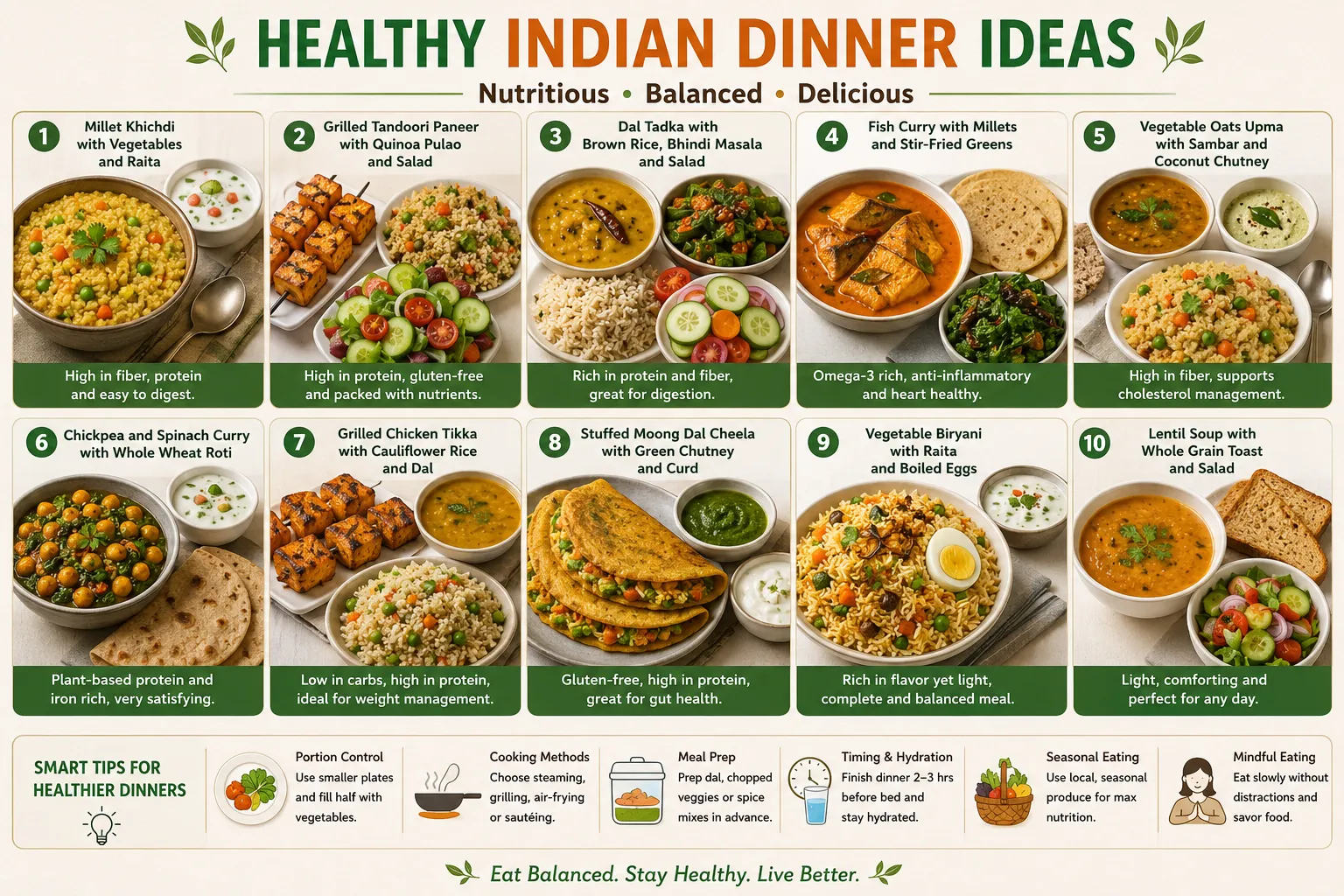
1. Millet Khichdi with Mixed Vegetables and Raita
A one-pot comfort meal that is light yet nourishing. Use foxtail or little millet combined with moong dal, carrots, beans, peas, and spinach. Season with cumin, turmeric, and ginger. Serve with a bowl of cucumber-tomato raita made with low-fat curd. This dish is rich in fiber, protein, and essential micronutrients while being easy to digest — perfect for weeknights.
2. Grilled Tandoori Paneer with Quinoa Pulao and Salad
Marinate paneer cubes in yogurt, spices, and herbs, then grill or air-fry them. Pair with quinoa cooked with vegetables and mild spices. Add a large mixed green salad with lemon dressing. This high-protein, gluten-free option supports muscle health and provides sustained energy without heaviness.
3. Dal Tadka with Brown Rice, Bhindi Masala, and Salad
A classic combination made healthier. Prepare protein-rich dal using a mix of arhar and masoor dal with minimal tadka. Serve alongside brown rice, stir-fried okra (bhindi) with minimal oil, and a fresh cucumber-onion salad. The fiber from vegetables and whole grains aids digestion and blood sugar control.
4. Fish Curry with Millets and Stir-Fried Greens
For non-vegetarians, fatty fish like rohu or salmon cooked in a light coconut or tomato-based gravy offers omega-3 benefits for heart and brain health. Serve with ragi or jowar roti and sautéed spinach or drumstick leaves. This meal is anti-inflammatory and highly nutritious.
5. Vegetable Oats Upma with Sambar and Coconut Chutney
A quick, filling twist on traditional upma. Cook oats with plenty of vegetables (carrots, beans, peas, capsicum) and serve with homemade sambar and mint-coconut chutney. Oats provide beta-glucan for cholesterol management, while the vegetables boost fiber intake.
6. Chickpea and Spinach Curry with Whole Wheat Roti
A hearty vegetarian option. Cook chickpeas with fresh spinach, tomatoes, and aromatic spices. Pair with 2-3 whole wheat rotis and a side of cucumber raita. Chickpeas deliver plant-based protein and fiber, making this meal satisfying and blood-sugar friendly.
7. Grilled Chicken Tikka with Cauliflower Rice and Dal
Marinate chicken in yogurt and spices, grill until tender. Serve with cauliflower rice (for lower carbs) and a light moong dal. Add a generous portion of salad. This lower-carb version is ideal for those managing weight or diabetes.
8. Stuffed Moong Dal Cheela with Green Chutney and Curd
A protein-packed savory pancake made from soaked moong dal, stuffed with grated vegetables. Serve hot with mint chutney and probiotic-rich curd. This gluten-free, light dinner is excellent for gut health and quick preparation.
9. Vegetable Biryani with Raita and Boiled Eggs
Make a lighter version using brown rice or millets, plenty of vegetables, and fragrant spices. Add boiled eggs for complete protein. Accompany with mint raita. This festive yet healthy meal satisfies cravings without excess calories.
10. Lentil Soup with Whole Grain Toast and Salad
A light yet comforting soup made with mixed lentils, vegetables, and spices. Serve with whole grain toast and a large fresh salad. Ideal for lighter summer evenings or when you want something soothing yet nutritious.
Smart Tips for Healthier Indian Dinners
- Portion Control: Use smaller plates and fill half with vegetables.
- Cooking Methods: Opt for steaming, grilling, air-frying, or sautéing instead of deep-frying.
- Meal Prep: Prepare dal, chopped vegetables, or spice mixes in advance to save time.
- Hydration and Timing: Finish dinner at least 2-3 hours before bedtime and stay hydrated throughout the day.
- Seasonal Eating: Use local, seasonal produce for maximum nutrition and freshness.
- Mindful Eating: Eat slowly without distractions to recognize fullness cues better.
Long-Term Benefits
Consistently choosing balanced Indian dinners supports weight management, improves energy levels, stabilizes blood sugar, enhances digestion, and reduces chronic disease risk. Over time, these habits contribute to better sleep quality and overall vitality.
Final Thoughts
Healthy Indian dinners do not require sacrificing taste or tradition. By thoughtfully combining whole grains, vibrant vegetables, quality proteins, and aromatic spices, you can create meals that are both deeply satisfying and nutritionally complete. Whether you prefer vegetarian classics or lighter non-vegetarian options, the key lies in balance, moderation, and mindful preparation.
Start small by incorporating one or two new ideas each week. Experiment with different grains and vegetables to keep meals interesting. With a little planning and creativity, your evening meal can become a cornerstone of good health and family bonding. In the Indian context, where food is an expression of love and care, making healthier dinner choices is one of the most meaningful ways to nourish both body and relationships.
